When a hen picks up a cut, scrape, or pecking injury, fast treatment matters. The right chicken wound spray can help keep the area clean, support skin recovery, and make daily care easier.
Below, we compare 10 popular poultry care options so you can choose a spray or ointment that fits your flock, budget, and preferred ingredients.
Best 10 Chicken Wound Spray Picks for 2026
Poultry First Aid Spray
Vetericyn Plus Chicken Wound Care Spray

- Versatile spray for common poultry wounds
- Antibiotic free and non-toxic formula
- No egg withdrawal period noted
Best For: Backyard flocks needing a gentle, all-purpose first aid spray
Sting-Free Skin Spray

- Odor-free, sting-free spray for poultry
- Safe around the eye and non-toxic if ingested
- No antibiotics, steroids, or alcohol
Best For: Sensitive birds and owners who want a gentle, easy spray
Large-Format Care Spray
Microcyn Poultry & Fowl Wound Support

- 16 oz bottle for routine flock care
- Non-irritating spray for minor skin issues
- Works for chickens, ducks, and livestock
Best For: Owners who want a larger spray for frequent minor wound care
Blue Ointment Barrier
Manna Pro Hen Healer Poultry Skin Ointment

- Lanolin-based ointment for minor cuts and scrapes
- Blue color helps discourage pecking
- Creates a barrier to insects and dirt
Best For: Targeted protection on visible minor injuries and peck-prone spots
Silver Solution Spray
Patented Silver Spray for Chickens & Birds

- Chelated silver and distilled water formula
- Non-stinging spray for skin and feather areas
- FDA registered and made in the USA
Best For: Backyard chicken keepers wanting a broad-use silver wound spray
Flock First Organic Spray
USDA Organic Poultry First Aid

- USDA certified organic and made in the USA
- Gentle spray for cuts, sores, and bumblefoot
- Designed not to burn or sting
Best For: Chicken owners looking for an organic, easy-to-use wound spray
Advanced Wound Care Spray
Ready-to-Use Poultry Wound Spray

- Low-pH, antibiotic-free formula
- Spray-on care for bumblefoot, burns, and sores
- Peck- and lick-safe when used as directed
Best For: Owners wanting a simple spray for routine poultry wound care
Silver-Infused Support
Natural silver spray for minor chicken wounds

- No-antibiotic formula with colloidal nano silver
- Targets pecking sores, bumblefoot, and cuts
- Compact 4 oz bottle for first aid kits
Best For: Backyard flocks needing simple, supportive wound care
Gentle Daily Care
No-rinse spray for routine chicken skin support

- Non-stinging and easy to spray on daily
- No egg withdrawal for laying hens
- Large 8.5 oz bottle with 2,000+ sprays
Best For: Owners who want a daily-use spray for minor flock skin issues
Clean Hypochlorous Care
Gentle HOCl spray for poultry wound support
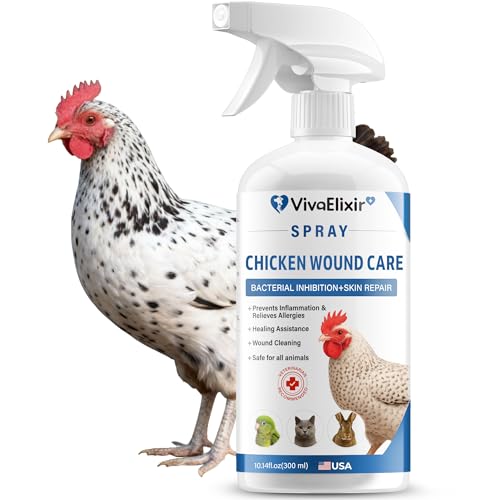
- Hypochlorous formula cleans without stinging
- Alcohol-free, dye-free, and non-toxic
- No withdrawal period for daily use
Best For: Mixed flocks needing gentle, broad-use wound support
Poultry First Aid Spray – Vetericyn Plus Chicken Wound Care Spray
If you want a chicken wound spray you can keep on hand for everyday flock mishaps, Vetericyn Plus Poultry Care Spray is built for fast, simple topical use. It’s aimed at common issues like pecking sores, flank wounds, breast blisters, vent prolapse, frost bite, and bumblefoot, with a formula described as non-irritating and antibiotic free.
Best For: Backyard chicken owners who want a versatile, veterinarian-recommended first aid spray for minor skin and wound care.
Pros:
- Designed for a wide range of poultry skin issues and wounds.
- Antibiotic free and non-toxic, with no egg withdrawal period noted.
- Safe, gentle ingredients are described as non-drying and non-irritating.
- Veterinarian recommended and positioned as a reliable flock first aid option.
Cons:
- Only available in an 8 oz bottle, which may run out quickly for larger flocks.
- Focused on topical support rather than major injury treatment.
Overall, this is a practical all-around poultry care spray for owners who want a trusted, easy-to-apply option for routine wound support. It stands out most when you need one product that can handle several common chicken skin problems.
Sting-Free Skin Spray – Banixx Chicken Wound Spray
Banixx for Pecking Sores, Bumble Foot, Fowl Pox, Raw Vent Area Infection, Chicken Leg/Foot Injuries
Check Price On AmazonBanixx is a chicken wound spray made for messy everyday problems like pecking sores, bumble foot, fowl pox, raw vent area infection, and leg or foot injuries. Its selling points are simple: odor-free, sting-free, safe around the eye, and non-toxic if ingested, which makes it appealing for birds that won’t sit still.
Best For: Poultry keepers who want a gentle spray for sensitive areas and hard-to-handle birds.
Pros:
- Odor-free and sting-free, which may make application easier.
- Safe around the eye and non-toxic if ingested.
- No antibiotics, steroids, or alcohol in the formula.
- Long shelf life for storage in the coop or barn.
Cons:
- Targets common surface issues rather than deep or severe wounds.
- Spray format may be less precise than an ointment for spot coverage.
This is a strong choice if your main concern is a gentle, low-drama spray for irritated skin and minor poultry injuries. It’s especially practical when you need something that’s easy to use on sensitive spots.
Large-Format Care Spray – Microcyn Poultry & Fowl Wound Support
Microcyn Poultry & Fowl Care Spray is a larger 16 oz chicken wound spray built for routine topical use across chickens, ducks, and other livestock. It’s positioned to support the natural healing process for minor cuts, scrapes, pecking sores, irritated skin, and other common poultry skin concerns, while offering an easy spray nozzle for quick application.
Best For: Flock owners who want a larger bottle for regular minor wound and skin care.
Pros:
- 16 oz size gives you more product than many smaller poultry sprays.
- Non-irritating formula designed for routine daily use.
- Easy spray nozzle helps reduce handling and stress.
- Suitable for chickens, ducks, and livestock.
Cons:
- Described as supportive care for minor issues, not a major wound treatment.
- Larger bottle may be more than needed for very small backyard flocks.
If you treat minor skin issues often, this spray’s bigger size and simple application make it a practical pick. It fits well in a farm or backyard setup where convenience and regular use matter.
Blue Ointment Barrier – Manna Pro Hen Healer Poultry Skin Ointment
Manna Pro Hen Healer is a lanolin-based poultry ointment for cuts, scrapes, sores, and pecking injuries when a spray isn’t the right fit. This chicken wound treatment is meant for body, legs, head, face, comb, and wattles, and its blue color is specifically noted to help prevent pecking while creating a barrier against insects and dirt.
Best For: Poultry owners who prefer an ointment for targeted protection on visible minor injuries.
Pros:
- Lanolin-based ointment that helps support healing of minor cuts and scrapes.
- Blue color is intended to help prevent pecking.
- Creates a barrier to insects and dirt.
- Can be used on multiple body areas, including comb and wattles.
Cons:
- Only 2 oz, so small containers may not last long.
- Ointment may be less convenient than a spray for quick, broad application.
This is a good choice if you want a more targeted poultry skin treatment and like the idea of a protective barrier. It’s especially useful for visible spots that may need extra coverage and peck deterrence.
Silver Solution Spray – Patented Silver Spray for Chickens & Birds
If you want a chicken wound spray for everyday coop first aid, this silver-based formula is built for simple spray-on care. It is designed for cuts, pecking sores, bumblefoot, burns, and other skin irritations, with a non-stinging formula that can be used on feathers and skin areas like the head, beak, feet, and wings.
Best For: Backyard chicken keepers who want a USA-made, silver-based spray for broad wound care use.
Pros:
- Patented chelated silver and distilled water formula
- Can be sprayed from up to 6 feet away using stream mode
- Safe for birds to peck and lick after application
- FDA registered and made under FDA and GMP guidelines in the USA
Cons:
- Only 12 fl oz, so frequent use may require repurchasing
- Best suited to topical care rather than deeper treatment
This is a practical pick if you prefer a gentle, broad-use spray that fits easily into a chicken first aid kit. Its simple ingredient list and easy application make it appealing for routine poultry care.
Flock First Organic Spray – USDA Organic Poultry First Aid
This chicken wound spray is aimed at backyard flocks that need a gentle, organic option for common injuries. It is USDA certified organic and designed for cuts, scrapes, pecking wounds, sores, minor burns, bumblefoot, frostbite, and scaly leg mites, with a spray format that is meant to be quick and easy to apply.
Best For: Poultry keepers who want USDA certified organic first aid for sensitive chickens.
Pros:
- USDA certified organic formula
- Made in the USA by a farmer-owned company
- Designed not to burn or sting sensitive poultry skin
- Convenient spray bottle for fast coop-side treatment
Cons:
- 8 oz size is smaller than some competing options
- Directions note the product is part of an outdoor coop-care setup, so follow use instructions carefully
For buyers who value organic sourcing and a simple treatment routine, this spray keeps things straightforward. It focuses on comfort and practicality, making it a solid first-aid shelf item for routine flock care.
Advanced Wound Care Spray – Ready-to-Use Poultry Wound Spray
If you need a chicken wound spray with a ready-to-use approach, this option is built for topical care of bumblefoot, vent prolapse, pecking sores, burns, and skin irritations. It is positioned as a low-pH, antibiotic-free formula that can be sprayed on and left to air dry, which keeps treatment simple for everyday poultry first aid.
Best For: Poultry owners who want a ready-to-use spray for frequent coop-side wound care.
Pros:
- Ready-to-use spray format for easy application
- Antibiotic-free, low-pH formula
- Peck- and lick-safe when used as directed
- Biodegradable, hypoallergenic, and made in the USA
Cons:
- Directions require proper dilution and careful use
- May not be ideal if you want a one-and-done direct-use bottle without mixing
This is a good fit if you want a more advanced-feeling wound care spray without harsh chemicals or complicated cleanup. It leans practical and low-fuss, especially for owners who keep a chicken first aid kit on hand.
Silver-Infused Support – Natural silver spray for minor chicken wounds
If you want a chicken wound spray for basic coop first aid, this silver-infused option is built for pecking sores, bumblefoot, cuts, and other minor skin issues. Its formula centers on colloidal nano silver and deionized water, with no artificial additives, and it’s designed for direct application to the affected area.
Best For: Backyard keepers looking for a simple, no-antibiotic spray for minor chicken skin care and everyday first aid.
Pros:
- No-antibiotic formula with colloidal nano silver and deionized water
- Made for pecking sores, bumblefoot, cuts, and minor wounds
- Can be sprayed directly on the injury area and is safe for head, beak, feet, and wings
- Compact 4 oz bottle for home use or travel
Cons:
- Directions note that it should be shaken before each use
- Product guidance says to consult a specialist before using
- Positioned as a complementary treatment, not a replacement for expert care
For owners who prefer a straightforward poultry spray without antibiotics, this one is geared toward routine wound support and easy storage in a chicken first aid kit. It’s practical for minor issues, but the label clearly frames it as supportive care rather than a standalone solution.
Gentle Daily Care – No-rinse spray for routine chicken skin support
This chicken wound spray is aimed at everyday flock care, with a non-stinging formula for pecking irritations, bumblefoot care, minor wounds, and vent-area support. It’s designed for easy spray-and-go use, with no rinsing required and no egg withdrawal for laying hens.
Best For: Backyard flocks that need a gentle, daily-use poultry spray for routine skin support and first aid.
Pros:
- Non-stinging formula for routine chicken skin care
- No egg withdrawal for laying hens
- Antibiotic- and steroid-free
- Large 8.5 oz bottle with over 2,000 sprays
Cons:
- Spray directions call for moving feathers aside and applying from 4–6 inches away
- Best suited to supportive care rather than major injuries
- Some users may prefer a more targeted treatment format
If you want a low-fuss poultry care spray for regular coop checks, this one stands out for its gentle feel and simple application. The no-rinse format and long-lasting bottle make it a practical pick for owners who want to keep a bird-care product on hand every day.
Clean Hypochlorous Care – Gentle HOCl spray for poultry wound support
For buyers comparing chicken wound spray options, this hypochlorous formula is focused on cleansing and skin-repair support for wounds, cuts, pecks, burns, and irritation. It’s positioned as a gentle, non-toxic spray that can be used without stinging and without a withdrawal period.
Best For: Poultry keepers who want a gentle hypochlorous spray for clean, everyday wound support across multiple bird species.
Pros:
- Hypochlorous acid formula designed to cleanse without stinging
- Supports wounds, cuts, pecks, burns, and skin irritation
- Alcohol-free, dye-free, and non-toxic
- No withdrawal period and suitable for chickens, ducks, and other birds
Cons:
- Product notes do not list bottle size details beyond 10.14 oz
- More focused on cleansing support than on a heavy-duty treatment approach
- Best suited to supportive care for minor to moderate issues
This is a strong fit if you want a cleaner, veterinary-minded approach to poultry first aid. The formula is built around gentle wound care and broad usability, which makes it useful for mixed flocks and routine maintenance alike.
How We Picked the Best Chicken Wound Spray Options
We focused on poultry-specific formulas designed for common backyard flock issues like minor cuts, pecking sores, bumblefoot, vent-area irritation, and scrapes. Priority went to products that are easy to apply, suitable for routine flock first aid, and clearly positioned for chicken care rather than general pet use.
We also considered ingredient style, format, and practical use. Some buyers want a hypochlorous or antimicrobial-style spray for simple daily care, while others prefer silver-based, organic, or ointment formulas for targeted spot treatment.
Quick Comparison: What to Expect
Most Chicken Wound Spray products fall into a few useful buckets. Spray formats are best for quick coverage and hard-to-reach areas. Ointments are better when you need longer contact on smaller spots. “Alternative” wound-care sprays may emphasize support for skin comfort and cleanliness without relying on a traditional antibiotic approach.
If you treat multiple birds, a larger bottle and easy spray nozzle can save time. If you only need occasional first aid, a smaller, more concentrated option may be enough.
Key Buying Factors for Chicken Wound Spray
1. Match the Formula to the Injury
For minor wounds and surface irritation, a simple spray is often the easiest choice. For bumblefoot or a stubborn sore, many keepers prefer a product that can be applied consistently without causing extra stress to the bird.
2. Consider Spray Versus Ointment
Sprays are faster and cleaner for flock use. Ointments may stay in place longer on foot pads, cracks, or smaller lesions. Choose the format you will realistically use every day if needed.
3. Check Ingredient Preferences
Some owners want organic or plant-forward ingredients. Others prefer silver-based or hypochlorous formulas for their simplicity. There is no single best option for every coop, so pick the style that fits your care routine and comfort level.
4. Look for Poultry-Specific Labeling
Products made for chickens and birds are easier to trust for flock first aid than general livestock or household wound products. Clear use cases such as pecking wounds, cuts, burns, and vent-area care are a plus.
Who Should Buy Which Chicken Wound Spray?
If you want a versatile everyday option, choose a poultry spray designed for multiple minor wound types. If you prefer a natural approach, look for an organic or botanical-based formula. If you are dealing with repeated pecking injuries or bumblefoot, pick a product built for frequent application and easy cleanup.
For mixed flocks or busy backyard keepers, the best Chicken Wound Spray is usually the one you can apply quickly, safely, and consistently when a bird needs attention.