Choosing the right chicken antiseptic spray can make a big difference when you’re treating pecking injuries, minor cuts, bumblefoot, or vent-area irritation. The best options support cleaning, skin recovery, and infection prevention without adding unnecessary stress to the bird.
In this roundup, we focus on sprays that are easy to apply, practical for backyard flocks, and suited to common poultry first-aid needs.
Best 10 Chicken Antiseptic Spray Picks for 2026
Poultry First-Aid Pick
Chicken Wound Care Spray for Daily First Aid

- For pecking sores, bumblefoot, and vent prolapse
- Antibiotic-free, non-toxic formula
- No egg withdrawal period
Best For: Backyard keepers needing a gentle daily poultry wound spray
Fast-Dry Spot Treatment
Fast-Drying Antiseptic Spray for Pets

- Fast-drying antiseptic wound dressing
- Spray application for easy use
- Targeted for feet, legs, and skin
Best For: Quick spot treatment on feet, legs, or skin
Gentle Hypochlorous Option
Hypochlorous Poultry Care Spray for Cuts and Pecks
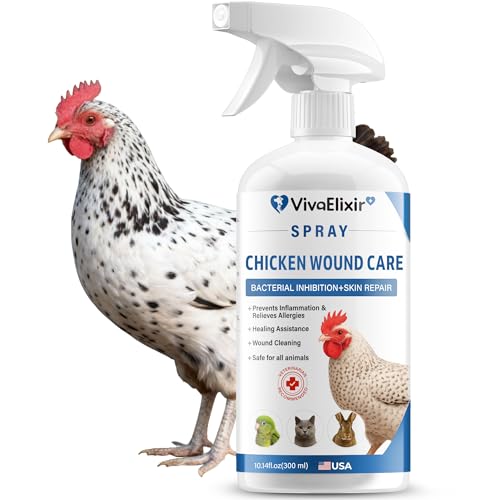
- Hypochlorous acid formula for wound care
- Alcohol-free, dye-free, and non-toxic
- No withdrawal period required
Best For: Poultry keepers wanting a gentle daily spray
Simple Poultry Antiseptic
Poultry Antiseptic Spray for Coop First Aid

- Specifically labeled for poultry
- Simple, no-frills positioning
- Suitable for basic first aid
Best For: Shoppers wanting a straightforward poultry antiseptic spray
Best Multi-Livestock Pick
Vetericyn Plus 16 oz Utility Spray

- Non-toxic, non-stinging formula
- Works as a one-step wound cleanser
- Safe if licked or ingested when used as directed
Best For: Poultry keepers who also need broader livestock wound care
Best Compact First-Aid Spray

- Povidone-iodine 5% antiseptic spray
- No alcohol or hydrogen peroxide
- 3 oz travel-size bottle
Best For: Compact first-aid kits needing a no-sting antiseptic spray
Best Poultry-Specific Pick
Chicken's Choice 8 oz Poultry Spray

- Made for chickens and birds
- Ready-to-use wound care spray
- Peck- and lick-safe when used as directed
Best For: Chicken owners wanting a poultry-specific first aid spray
Quick-Apply Poultry Wound Care
Chicken Wound Spray, No Rinse, No Contact

- HOCl-based formula for gentle wound cleaning
- No-rinse, no-contact spray application
- Safe for licking or pecking; no withdrawal period
Best For: Busy coops and backyard flocks needing simple wound care
Gentle Flock Skin Support
Lemant Poultry Care Spray 8.5 oz

- Non-stinging spray for daily poultry skin care
- Safe if pecked or ingested; no egg withdrawal
- Helpful for bumblefoot, pecking irritations, and vent-area care
Best For: Backyard flocks needing gentle daily skin support
Concentrated Advanced Care
Chicken's Choice Wound Care 32 oz

- Concentrate makes 32 oz of ready spray
- For bumblefoot, vent prolapse, burns, and skin irritations
- Antibiotic-free, low-pH formula with no-rinse use
Best For: Buyers wanting a larger-format wound-care concentrate
Poultry First-Aid Pick – Chicken Wound Care Spray for Daily First Aid
If you want a chicken antiseptic spray for routine flock first aid, Vetericyn Plus Poultry Care Spray is built for common skin problems like pecking sores, flank wounds, breast blisters, vent prolapse, frost bite, and bumblefoot. It’s positioned as a healing aid and skin repair spray you can use a few times daily, with a non-toxic formula that’s made to be gentle on poultry skin.
Best For: Backyard chicken keepers who need a safe, everyday wound spray for multiple skin issues.
Pros:
- Use a few times daily for pecking sores, bumblefoot, vent prolapse, and more
- Antibiotic-free and non-toxic
- No egg withdrawal period
- Veterinarian recommended and designed for poultry first aid
Cons:
- 8-ounce size may be modest for larger coops or frequent use
- Focused on wound care, not a general-purpose coop disinfectant
Overall, this is a practical chicken antiseptic spray option if you want a trusted, poultry-specific product for skin repair and routine wound support. Its safety-focused formula and broad use cases make it a strong pick for keeping in a coop first-aid kit.
Fast-Dry Spot Treatment – Fast-Drying Antiseptic Spray for Pets
Dr. Naylor Blu-Kote Aerosol is a fast-drying antiseptic wound dressing in spray form that can fit a chicken antiseptic spray search when you need something for feet, legs, or skin. The listing emphasizes a sterile, medicinal tincture-style formula designed for pets, with a practical spray application for quick wound dressing.
Best For: Spot-treating feet, legs, and skin wounds that need a fast-drying antiseptic spray.
Pros:
- Fast-drying antiseptic wound dressing
- Spray format makes application simple
- Targeted for feet, legs, and skin
- Sterile formula
Cons:
- Product details are sparse compared with other poultry-focused options
- Not specifically described as chicken-only care
This is a straightforward antiseptic spray choice if you want a quick-drying dressing for localized problems. It looks best suited to targeted use rather than broad poultry skin care.
Gentle Hypochlorous Option – Hypochlorous Poultry Care Spray for Cuts and Pecks
This chicken antiseptic spray uses a hypochlorous acid formula made for poultry care and wound support. It’s described as gentle, alcohol-free, dye-free, and non-toxic, with uses that include pecking injuries, bumblefoot, cuts, burns, and skin irritation while helping keep skin clean and protected.
Best For: Poultry owners who want a gentle hypochlorous spray for everyday wound and skin care.
Pros:
- Hypochlorous acid formula designed to promote rapid healing
- Gentle, alcohol-free, dye-free, and non-toxic
- Suitable for cuts, pecks, burns, and vent prolapses
- No withdrawal period required
Cons:
- Larger 10.14 oz bottle may be more than needed for very light use
- Positioned as wound support, not a heavy-duty disinfectant
For owners who want a modern, low-irritation spray, this is a strong contender. Its poultry-friendly formula and broad everyday uses make it especially useful for flocks that need frequent skin and wound care.
Simple Poultry Antiseptic – Poultry Antiseptic Spray for Coop First Aid
Spurrs Big Fix Poultry Antiseptic Spray is a simple chicken antiseptic spray option for owners who want a product specifically labeled for poultry. The provided details are limited, but the name and category point to a basic antiseptic spray intended for poultry first-aid use.
Best For: Buyers who want a straightforward poultry antiseptic spray with a simple, dedicated focus.
Pros:
- Specifically labeled as a poultry antiseptic spray
- Simple, no-frills product positioning
- May suit basic coop first-aid needs
Cons:
- Very limited product details in the listing
- No specific wound uses or formula benefits provided
- Harder to compare against more fully described alternatives
If you prefer a direct poultry antiseptic spray and don’t need a long feature list, this product keeps things simple. Because the available details are sparse, it makes the most sense as a basic, poultry-focused first-aid option.
Best Multi-Livestock Pick – Vetericyn Plus 16 oz Utility Spray
If you want a chicken antiseptic spray that can also pull double duty across a broader farm setup, this Vetericyn Plus utility spray is built for general wound cleansing and sensitive skin care. It’s a non-rinse, non-toxic option that can be used on irritated areas, minor wounds, and damaged teats without alcohol, steroids, or antibiotics.
Best For: Poultry keepers who also need a versatile livestock spray for mixed-animal wound care.
Pros:
- Non-toxic formula with no alcohol, steroids, or antibiotics
- Safe if licked or ingested when used as directed
- Easy one-step spray for cleansing, irrigating, and moisturizing
- Useful for general wounds and sensitive areas on livestock
Cons:
- Not specifically formulated for chickens or poultry
- Larger 16 oz bottle may be more than needed for small coops
For buyers comparing chicken antiseptic spray options, this is a practical pick if you want a gentle, easy-to-apply cleanser that works beyond poultry. It is best suited to people who value a non-stinging, farm-ready spray and don’t mind choosing a livestock-focused product rather than a chicken-specific formula.
Best Compact First-Aid Spray – Betadine 5% Antiseptic Spray
Betadine is a familiar antiseptic spray option when you want proven germ-killing power in a compact bottle. While it’s made for people rather than birds, it can still be a reference point for anyone shopping for a chicken antiseptic spray and looking for a no-sting, iodine-based first aid spray.
Best For: Small first-aid kits where a compact, no-sting antiseptic spray is needed.
Pros:
- Povidone-iodine 5% formula for minor cuts, scrapes, and burns
- No alcohol or hydrogen peroxide, with a no-sting promise
- Convenient 3 oz travel-size spray bottle
- Trusted brand used by healthcare professionals for over 50 years
Cons:
- Designed for adults and children, not poultry-specific care
- Small size may not suit repeated farm use
This is a solid antiseptic spray for general first aid, but it is not formulated as a chicken treatment product. If your priority is poultry care, a bird-specific spray is the better fit; if you want a compact iodine spray for a kit, this one is straightforward and familiar.
Best Poultry-Specific Pick – Chicken's Choice 8 oz Poultry Spray
This chicken antiseptic spray is the most directly targeted option in the group, with a formula made for poultry wound care. It’s designed for common chicken issues like bumblefoot, vent prolapse, pecking sores, burns, and skin irritations, and it sprays on ready to use with no mixing required.
Best For: Chicken owners who want a poultry-specific wound care spray for everyday coop first aid.
Pros:
- Specifically made for chickens and birds
- Ready-to-use spray for bumblefoot, burns, and skin irritations
- Low-pH, antibiotic-free formula
- Peck- and lick-safe when used as directed
Cons:
- Directions mention avoiding the eyes because it may sting
- Best suited to poultry use rather than general livestock care
For most buyers seeking a true chicken antiseptic spray, this is the most relevant match because it is built specifically for poultry. Its ready-to-use format and no-rinse application make it easy to keep on hand for routine coop emergencies and minor skin issues.
Quick-Apply Poultry Wound Care – Chicken Wound Spray, No Rinse, No Contact
If you want a chicken antiseptic spray that’s simple to use during everyday flock care, this no-rinse wound spray is built for fast, low-stress application. It uses hypochlorous acid (HOCl) to help clean cuts, abrasions, stabs, and foot abscesses without harsh chemicals, and it’s designed to air dry after spraying.
Best For: Backyard keepers and ranches that need an easy wound spray for poultry and other animals.
Pros:
- HOCl-based formula is described as safe and gentle for wound cleaning and tissue repair support.
- No rinse and no contact application helps reduce handling stress for active birds.
- Safe for licking or pecking after spraying, with no withdrawal period required.
- Leaves no sticky residue, strong odor, or feather staining.
Cons:
- Focused on general wound care, so it may not offer the more specialized use cases of some competitors.
- Only the spray bottle format is included; no applicator extras are mentioned.
Overall, this is a practical chicken antiseptic spray for routine first aid when you want something quick, gentle, and easy to keep on hand. Its no-rinse format and broad animal suitability make it especially useful for busy coops and mixed livestock settings.
Gentle Flock Skin Support – Lemant Poultry Care Spray 8.5 oz
This chicken antiseptic spray is positioned as a calm, non-stinging option for everyday poultry skin care. It’s made for pecking irritations, bumblefoot care, minor wounds, and vent-area support, with a no-rinse spray-and-go approach that fits routine coop checks.
Best For: Backyard chicken owners who want a gentle daily care spray for minor skin issues and flock wellness.
Pros:
- Non-stinging formula designed for daily poultry care and skin comfort.
- Safe if pecked or ingested, with no egg withdrawal for laying hens.
- Useful for bumblefoot care, vent-area support, pecking irritations, and feather regrowth periods.
- Over 2,000 sprays per bottle adds good value for ongoing use.
Cons:
- Designed for gentle support, so it may not suit more serious wound-care needs.
- Best results depend on proper application and routine use.
For flock owners looking for a dependable chicken antiseptic spray to keep in a first aid kit, this one stands out for its mild feel and broad everyday use. It’s a convenient choice when you want low-fuss care without disrupting laying cycles.
Concentrated Advanced Care – Chicken's Choice Wound Care 32 oz
If you’re comparing chicken antiseptic spray options for more advanced flock care, this concentrate offers a larger-format wound treatment approach. It’s made to be diluted before use and is described as suitable for bumblefoot, vent prolapse, pecking sores, burns, and other skin irritations, with a no-rinse application once mixed.
Best For: Owners who want a concentrated poultry wound-care spray for a range of skin issues.
Pros:
- Concentrate format makes 32 oz of spray, which can be practical for repeated use.
- Antibiotic-free and low-pH formula is designed to cleanse skin without harsh chemicals.
- Peck- and lick-safe when used as directed, with no strong odors or staining.
- No-rinse application after dilution keeps treatment straightforward.
Cons:
- Requires mixing before use, so it is less convenient than ready-to-spray bottles.
- Directions note avoiding the eyes because it may sting.
- For conditions not improving in 7-10 days, veterinary follow-up is recommended.
This is a strong pick if you want a chicken antiseptic spray with broader treatment flexibility and a larger yield. The concentrate format rewards buyers who don’t mind an extra prep step in exchange for more volume and versatile use.
How We Picked These Chicken Antiseptic Sprays
We looked for poultry-friendly formulas that are easy to spray, suitable for common injury types, and useful for both spot treatment and routine flock first aid. Priority went to products with clear wound-care use cases, low-stress application, and ingredients or claims that fit everyday chicken care.
We also considered whether a spray is designed specifically for poultry or broad enough for livestock use, since that affects how versatile it will be in a mixed-animal setup. Ease of use matters too: a good Chicken Antiseptic Spray should cover the area evenly without requiring complicated prep.
Quick Comparison
Some sprays are best for targeted poultry use, while others are more general-purpose wound-care products that can work across animals. If you want a dedicated chicken-first option, choose a formula marketed for pecking wounds, bumblefoot, or vent care. If you prefer one bottle for multiple animals, a broader livestock antiseptic can be a better fit.
Think in terms of use case rather than brand alone: healing aid sprays are often chosen for everyday wound management, while antiseptic sprays with stronger germ-killing claims may be preferred for fresh cuts and scrapes.
Key Buying Factors for Chicken Antiseptic Spray
Injury Type
Match the spray to the problem. Minor cuts, pecking injuries, and abrasions usually call for a general wound-care spray. Bumblefoot, vent issues, and deeper skin irritation may benefit from products positioned for poultry recovery and skin repair.
Formula and Safety
Look for formulas that are intended for use around birds and won’t add unnecessary irritation. If you handle multiple species, a non-toxic or antibiotic-free option may be useful, but always follow label directions and check withdrawal guidance if applicable.
Application Style
No-rinse and no-contact sprays can reduce handling stress, especially on skittish birds or painful spots. Aerosols may offer quicker coverage, while liquid sprays can be easier to direct into small areas.
Coverage and Frequency
Consider bottle size and how often you’ll use it. Small flocks may be fine with a compact bottle, while larger coops or recurring foot issues may justify a larger format for better value.
Who Should Buy Which Chicken Antiseptic Spray?
If you want a poultry-specific option for routine coop first aid, choose a Chicken Antiseptic Spray made for wounds, pecking sores, and skin recovery. If your main concern is fresh, superficial injury cleanup, a broad antiseptic spray may be enough.
Backyard keepers with mixed animals may prefer a versatile livestock spray, while owners dealing with repeated bumblefoot or vent-area problems should prioritize products marketed for those exact poultry needs. The best choice is the one that matches your flock’s most common injuries and your comfort level with handling birds.