When a hen gets a cut, scrape, or pecking injury, quick action matters. The right chicken wound sealant or wound-care product can help protect the area, reduce contamination, and support recovery.
Below, we’ve rounded up 10 options designed for common poultry first-aid needs, from sprays and gels to adhesive-style solutions, so you can choose the best fit for your flock and injury type.
Best 10 Chicken Wound Sealant Picks for 2026
Vetericyn Plus Poultry Care Spray

- Helps with pecking sores, bumblefoot, and other minor poultry injuries.
- Antibiotic free, non-toxic, and no egg withdrawal period noted.
- Useful as a repeat-use first-aid spray for chickens and other birds.
Best For: Backyard flock owners needing a gentle, versatile poultry wound care spray
3M Vetbond Tissue Adhesive

- Fast-acting tissue adhesive for minor cuts and small surgical sites.
- Creates a waterproof seal and includes reusable applicator tips.
- Blue tint helps with precise drop-by-drop application.
Best For: Small clean wounds that need quick, waterproof closure
Manna Pro Hen Healer Ointment

- Blue poultry ointment helps protect minor cuts, scrapes, and sores.
- Creates a barrier against insects and dirt.
- Made for body, legs, comb, wattles, and other poultry areas.
Best For: Chicken keepers wanting a protective blue ointment for minor injuries
Chicken Wound Care ProGel

- Controlled gel for targeted chicken skin and feather care.
- Contains coconut oil and aloe vera for a hydrating feel.
- Designed for repeated use with mess-free application.
Best For: Owners wanting a targeted gel for focused poultry skin care
Wound Spray for Chicken & Birds

- Antibiotic-free formula with colloidal nano silver
- Supports pecking sores, bumblefoot, and cuts
- 4-oz spray fits a chicken first aid kit
Best For: Minor poultry skin issues and routine flock first aid
WoundSeal Topical Powder

- Forms an instant scab to help stop bleeding fast
- Single-use tubes are easy to carry anywhere
- Made for cuts, scrapes, and abrasions
Best For: Fast, portable first aid for minor bleeding wounds
Lemant Poultry Care Spray

- Non-stinging spray for everyday flock care
- Safe if pecked or ingested, with no egg withdrawal
- Over 2,000 sprays per bottle
Best For: Routine chicken skin support and minor wound care
Chicken Wound Spray for Birds & Chickens

- Chelated silver and distilled water formula
- Safe for birds to peck or lick after use
- Sprays on wounds, pecking sores, and burns
Best For: Simple, USA-made poultry skin care
Chicken Wound Spray for Poultry
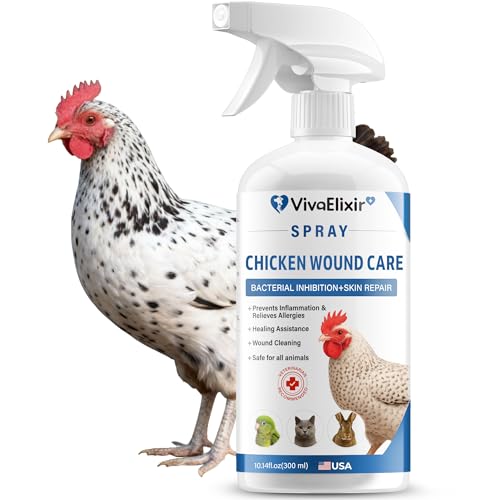
- Hypochlorous acid formula for gentle cleansing
- Alcohol-free, dye-free, and non-toxic
- No withdrawal period for daily poultry care
Best For: Routine flock first aid with a gentle spray
Chicken's Choice Wound Care Spray

- Low-pH, antibiotic-free ProH Technology
- Peck- and lick-safe when used as directed
- No bandages, no strong odor, no staining
Best For: Low-fuss spray care for common poultry wounds
Spray Support Pick – Vetericyn Plus Poultry Care Spray
If you want a chicken wound sealant-style spray for everyday coop first aid, Vetericyn Plus Poultry Care is built for quick, repeated use on common poultry skin problems. It’s designed as a healing aid and skin repair spray for pecking sores, breast blisters, vent prolapse, frost bite, bumblefoot, and other minor injuries.
Best For: Backyard keepers who want a non-antibiotic spray for frequent spot care on chickens and other birds.
Pros:
- Helps with a wide range of poultry wounds and skin issues.
- Antibiotic free and non-toxic, with no egg withdrawal period noted.
- Veterinarian recommended and easy to keep in a first-aid kit.
- Safe for repeated use a few times daily as needed.
Cons:
- Spray format may not be as precise as a gel or glue for tiny cuts.
- Not a true adhesive sealant for closing wounds.
For poultry owners who want a practical, low-stress treatment to manage minor chicken injuries, this spray is a strong all-around option. It’s better suited to cleaning and supporting skin repair than physically sealing a wound shut.
Fast Seal Fix – 3M Vetbond Tissue Adhesive
For a chicken wound sealant that actually closes small cuts, 3M Vetbond Tissue Adhesive is the most closure-focused option here. It forms a fast bond in seconds, creating a waterproof protective seal for minor wounds and small surgical sites.
Best For: Small, clean cuts or minor surgical sites where quick wound closure is the priority.
Pros:
- Forms a strong bond in seconds for fast wound closure.
- Waterproof seal helps keep out dirt and germs.
- Blue tint and reusable tips make application more precise.
- Veterinary-grade and used on cats, dogs, birds, reptiles, and small mammals.
Cons:
- Only appropriate for minor, clean wounds—not larger injuries.
- Requires careful application to avoid mess.
If you need an actual adhesive-style sealant rather than a spray or ointment, Vetbond is the most direct match. It’s a compact first-aid tool for controlled, fast closure when the wound size and location are suitable.
Coop Ointment Choice – Manna Pro Hen Healer Ointment
Manna Pro Hen Healer is a poultry ointment option for owners looking for a chicken wound sealant alternative that supports minor skin recovery while forming a protective barrier. It’s made for use on body, legs, head, face, comb, and wattles, and it helps cover cuts, lacerations, scrapes, and sores.
Best For: Poultry keepers who want a blue ointment barrier for minor cuts and pecking-related damage.
Pros:
- Temporarily protects minor cuts, scrapes, lacerations, and sores.
- Creates a barrier to insects and dirt.
- Blue color can help discourage pecking.
- Made for all classes of poultry and multiple body areas.
Cons:
- Ointment is less precise than a tissue adhesive for closure.
- Not described as a waterproof wound glue.
This is a solid middle-ground choice if you want a protective poultry ointment rather than a true glue or spray. It’s especially practical when the goal is to shield minor injuries and help them stay cleaner in the coop.
Stay-Put Gel Pick – Chicken Wound Care ProGel
Chicken Wound Care ProGel is a stay-put gel option for poultry owners who want a chicken wound sealant-style product that can be applied directly and left to air dry. Its formula is designed for targeted skin and feather care, with coconut oil and aloe vera for a hydrating, conditioning feel.
Best For: Owners who want a controlled, mess-free gel for focused chicken skin and feather care.
Pros:
- Precision gel allows focused, controlled application.
- Designed to help keep skin and feathers hydrated and conditioned.
- Contains coconut oil and aloe vera.
- Suitable for chickens, ducks, other birds, and more.
Cons:
- Described more as skin and feather support than wound closure.
- Needs repeated application 2-3 times per day.
If you prefer a gel over a spray, this product offers a cleaner, more targeted way to treat specific areas. It’s a practical choice for routine poultry care when you want a stay-put formula that’s easy to apply.
Silver-Infused Spray – Wound Spray for Chicken & Birds
If you’re looking for a chicken wound sealant-style option for minor flock injuries, this silver-infused spray is designed for pecking sores, bumblefoot, cuts, and other small irritations. It uses colloidal nano silver with deionized water and is positioned as a gentle, antibiotic-free first-aid spray for birds.
Best For: Backyard chicken keepers who want a simple spray for minor skin issues, coop first aid, and routine flock care.
Pros:
- Antibiotic-free formula with colloidal nano silver and deionized water
- Made for pecking sores, bumblefoot, cuts, and minor wounds
- Can be sprayed directly on the affected area and used 2-4 times daily
- Compact 4-oz bottle fits well in a chicken first aid kit
Cons:
- Designed as a complementary treatment, not a replacement for specialist care
- Requires shaking before use for best results
- Claims focus on support and care rather than a true sealing action
This is a practical pick if you want a bird-safe spray for everyday minor wound support rather than a heavy-duty treatment. It’s especially useful to keep on hand for quick spot care at home or while traveling.
Instant-Scab First Aid Powder – WoundSeal Topical Powder
For situations where a chicken wound sealant solution needs to stop bleeding fast, this topical powder is built to combine with blood and form an instant scab. It is aimed at cuts, scrapes, and abrasions, making it more of a sealing first-aid product than a bird-specific spray.
Best For: Quick-response first aid for minor bleeding cuts, scrapes, and abrasions at home or on the go.
Pros:
- Designed to stop bleeding in seconds by forming an instant scab
- Waterproof scab forms in about an hour
- Single-use tubes are easy to carry in a pocket or bag
- FDA cleared and widely used by health professionals
Cons:
- Intended for minor cuts, scrapes, and abrasions rather than poultry-specific care
- Powder format is less convenient than a spray for routine flock use
- Single-use design means you’ll need multiple packets for repeat needs
This is the most sealant-like option in the roundup, especially if your priority is quickly covering a minor wound and limiting contamination. It’s a handy travel and emergency item, though it’s not tailored specifically to chickens.
Gentle Daily Poultry Spray – Lemant Poultry Care Spray
This chicken wound sealant alternative is a gentle poultry spray made for everyday flock care, including pecking irritations, bumblefoot care, minor wounds, and vent-area support. The non-stinging, antibiotic- and steroid-free formula is meant to be easy to use during routine coop checks.
Best For: Backyard flocks needing a gentle, no-rinse spray for daily skin support and minor wound care.
Pros:
- Non-stinging formula for routine poultry skin care
- Safe if pecked or ingested, with no egg withdrawal for laying hens
- Useful for bumblefoot care, pecking irritations, and vent-area support
- Easy spray-and-go application with over 2,000 sprays per bottle
Cons:
- Does not claim to create a true wound seal or scab
- Focused on support and comfort rather than intensive treatment
- Larger bottle may be more than some keepers need for occasional use
If you want a low-stress, everyday poultry care spray, this one is built for easy flock maintenance rather than aggressive wound closure. It makes the most sense as a staple in a chicken first aid kit for minor issues and ongoing skin support.
Patented Silver Spray – Chicken Wound Spray for Birds & Chickens
If you want a chicken wound sealant-style spray that is simple to apply, this silver solution is built for fast, no-fuss poultry care. It’s designed for wounds, pecking sores, bumblefoot, cuts, burns, and skin irritations, with a formula that can be sprayed on all skin and feather areas.
Best For: Backyard flock owners who want an easy-to-use, USA-made silver spray for common chicken skin issues.
Pros:
- Patented silver solution made with chelated silver and distilled water.
- Safe for birds to peck or lick during and after application.
- Can be sprayed from up to 6 feet away using the stream option.
- Doesn’t sting and can be applied multiple times per day.
Cons:
- Works as a spray, not a thick ointment or gel.
- May not appeal to buyers who prefer non-silver formulas.
- Requires direct application and air drying for best use.
This is a practical first-aid style option if you want a gentle spray that helps cleanse and protect irritated areas. Its simplicity and ready-to-use format make it a strong pick for routine chicken wound care.
Hypochlorous Healing Spray – Chicken Wound Spray for Poultry
This chicken wound sealant option uses hypochlorous acid to support cleansing and healing for everyday flock injuries. It’s made for wounds, cuts, pecks, burns, and skin repair needs like vent prolapses, with a gentle formula that’s meant to be easy to use around birds and other animals.
Best For: Poultry keepers looking for a gentle, non-toxic wound spray for frequent first-aid use.
Pros:
- Hypochlorous acid formula is alcohol-free, dye-free, and non-toxic.
- Safe if licked by animals and suitable for chickens, ducks, and other birds.
- No withdrawal period required, which supports daily use.
- Veterinarian recommended and designed for simple spray application.
Cons:
- Less specialized-feeling than some dedicated poultry skin treatments.
- Best results depend on consistent use as part of first aid care.
- No detailed directions for severe cases beyond general wound support.
This is a solid pick if you want a low-fuss spray for routine flock injuries and skin irritation. The non-toxic, no-withdrawal approach makes it especially convenient for backyard poultry care.
ProH Advanced Care – Chicken's Choice Wound Care Spray
If you’re comparing chicken wound sealant products and want a ready-to-use spray, this formula is aimed at common poultry injuries and skin irritation. It’s designed for bumblefoot, vent prolapse, pecking sores, burns, and other problem areas, with a low-pH approach that avoids harsh chemicals.
Best For: Chicken owners who want a spray that’s peck- and lick-safe when used as directed.
Pros:
- Low-pH, antibiotic-free formula with proprietary ProH Technology.
- Peck- and lick-safe when used as directed.
- No bandages required and no strong odors or staining.
- Made in the USA, biodegradable, and hypoallergenic.
Cons:
- Directions require mixing into the included spray bottle for use.
- Avoid the eyes because it may sting.
- May need repeated application two times daily for treatment.
This option stands out for buyers who want a practical poultry wound spray with straightforward daily-use directions. It looks especially useful for keepers who want a cleaner, low-odor treatment that can be sprayed and left to dry.
How We Picked These Chicken Wound Sealant Options
We focused on products that are commonly used for poultry first aid and that fit real backyard and small-flock needs. Priority went to products with clear intended uses, practical application formats, and versatility for issues like cuts, scrapes, pecking sores, bumblefoot, and minor skin irritation.
We also looked at ease of use, whether the product is better suited for daily care or short-term sealing, and whether it makes sense for different flock sizes and handling routines.
Quick Comparison
Sprays are usually the easiest to apply over feathers and around sensitive areas, while gels and ointments tend to stay put longer on localized spots. Adhesive-style options are more appropriate when you need a true sealing effect for small, clean wounds rather than broad topical care.
If you want the simplest all-around choice, a spray is often the most flexible. If the goal is targeted coverage, a thicker gel or ointment may be a better match. For minor, clean cuts where you need a fast barrier, a dedicated adhesive product can be useful.
Key Buying Factors for Chicken Wound Sealant
Type of Injury
Match the product to the problem. Pecking sores, superficial cuts, and irritated skin often do well with sprays or gels. Deeper wounds, active bleeding, or injuries that may need closure should be evaluated carefully, and a true sealant or adhesive is only appropriate when the wound is clean and the product instructions support that use.
Formula and Residue
Consider whether you want a liquid spray, a thicker gel, or a powder. Sprays are convenient, but some leave less visible coverage. Gels and ointments can cling better to the skin. Powders may help with moisture control and short-term sealing, but they are generally more situational.
Ease of Handling
Chickens can be hard to treat safely, so choose a format that lets you work quickly. If you’re treating an anxious bird or a hard-to-reach spot, a spray may reduce stress. For very specific areas, a more precise application method may be worth the extra effort.
Flock Use and Storage
For backyard keepers, it helps to keep one product that covers several common problems. Check shelf stability, container size, and whether the product is practical to store in a coop-side first-aid kit.
Who Should Buy Which Chicken Wound Sealant?
Buyers with a small backyard flock: A versatile spray or gel is usually the best starting point because it handles the most common chicken injuries with minimal fuss.
Keepers dealing with frequent pecking or bumblefoot: Look for a product designed for repeated topical care and easy reapplication.
Owners needing a fast barrier for a minor clean wound: Consider a true Chicken Wound Sealant or adhesive-style option for short-term protection, following label directions closely.
People who want the easiest application: Spray formats are generally the most user-friendly, especially when you need to treat more than one bird.
As always, if a wound is deep, infected, rapidly worsening, or bleeding heavily, use these products only as part of appropriate poultry care and seek professional advice when needed.