Choosing the right guinea fowl waterer matters more than many first-time keepers expect. Guineafowl can be messy, active, and quick to tip light accessories, so the best options focus on stability, shallow access, and low-waste design.
In this roundup, we focused on practical waterers that work well for keets, mixed poultry broods, and small flock setups where safety and cleanliness are priorities.
Best 10 Guinea Fowl Waterer Picks for 2026
Brooder Starter Kit
Automatic 1L Chick Feeder & Waterer Set

- 1L waterer with automatic outlet
- 8 feeding ports for small groups
- Anti-drowning, waste-reducing design
Best For: Small brooder setups for chicks and other small poultry
Quail-Specific Base
1 Quart Screw-On Waterer Base, 3 Pack

- Heavy-duty polystyrene build
- Fits matching Little Giant jar only
- Narrow channel suits quail and chicks
Best For: Owners who already have the matching jar and need a durable base
Reversible Chick Waterer

- Reversible base for food or water
- 32 oz capacity for baby chicks
- Compact, easy-to-clean design
Best For: Baby chicks and other small poultry in a brooder
Anti-Drown Dual-Pack
2 Pack Quail Water Feeder, 400ml Safety

- Anti-drowning design for small birds
- 400ml capacity with transparent body
- Includes 2 feeders with different flow rates
Best For: Small birds and chicks needing a safer, compact waterer
Adjustable Brooder Kit
Lil'Clucker 1L Feeder and 1.5L Waterer

- Anti-tip base and anti-drown moat
- Adjustable leg heights for growing chicks
- Leak-proof, spill-proof design helps reduce mess
Best For: Indoor brooders and small flocks that need a safer starter set
DIY Bottle Base Set
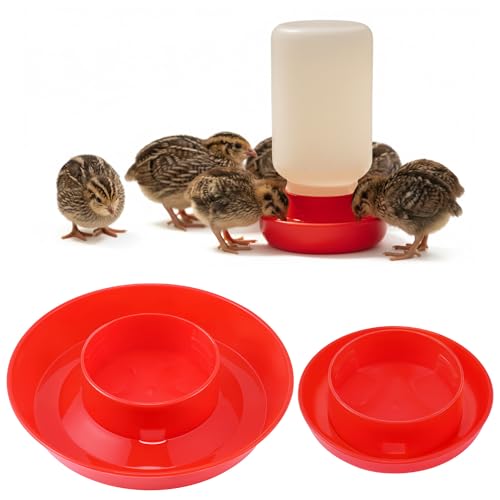
- Uses your own screw-top bottle
- Two sizes for drinking and feeding
- Designed to reduce drowning risk
Best For: DIY small-poultry setups with bottles you already have
Mini Chick Combo
Automatic Feeder & Waterer Set

- Gravity-fed waterer with automatic discharge chassis
- Rotating sleeve design for sturdier assembly
- Compact size for baby birds and chicks
Best For: Tiny juvenile birds needing a simple feeder-waterer combo
Large-Capacity Pick
Quail Water Feeder for Small Birds
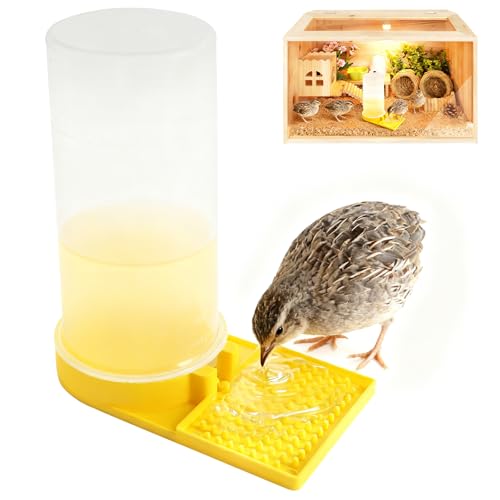
- Large-capacity build cuts down on refill trips
- Works as a waterer or feeder for small birds
- Detachable parts for easier cleaning
Best For: Owners wanting one versatile waterer for quails and chicks
Mini Space Saver
Compact Chick Feeder and Waterer Kit

- Very compact for brooder or cage use
- Gravity-fed water base with hollow top fill
- Detachable parts for cleaning and storage
Best For: Small juvenile birds in tight spaces
Brooder Starter Kit – Automatic 1L Chick Feeder & Waterer Set
If you’re comparing a guinea fowl waterer for very young birds, this 1L feeder-and-waterer set is built more like a brooder starter kit than a large flock solution. It’s sized for chicks and other small poultry, with an automatic water outlet, a compact footprint, and a design aimed at reducing waste and protecting babies from drowning.
Best For: Small brooder setups where you want a compact feeder and waterer for chicks, ducklings, or quail.
Pros:
- 1L waterer and 8 feeding ports can serve multiple chicks at once
- Automatic water outlet helps keep water available without constant refilling
- Waste-free feeder design reduces extra feed mess
- Anti-drowning waterer design adds safety for young birds
Cons:
- Best suited to chicks and small birds, not larger poultry needs
- Hand wash only
- Small capacity means more frequent refills than a larger waterer
Overall, this is a practical entry-level option when you need a simple, space-saving setup for young poultry. It’s not the most versatile choice for mature birds, but for starter brooding it covers the basics well.
Quail-Specific Base – 1 Quart Screw-On Waterer Base, 3 Pack
If your guinea fowl waterer search is really about tiny birds, this screw-on base is a niche option for quail and baby poultry chicks. It’s just the base, not the jar, and it’s designed to pair with Little Giant’s 1-quart screw-on waterer jar to create a gravity-fed setup with a narrow channel.
Best For: Buyers who already have the matching jar and want a durable base for quail or chicks.
Pros:
- Heavy-duty polystyrene construction is made to resist cracks and temperature swings
- Screw-on design makes assembly and disassembly straightforward
- Narrow channel is designed for quail and baby poultry
- 3-pack adds convenience if you want spares or multiple setups
Cons:
- Jar is not included
- Only fits the matching Little Giant 1-quart screw-on jar
- Too small and specialized for most adult poultry watering needs
This is a practical replacement or add-on part rather than a complete waterer. It makes the most sense if you already own the compatible jar and need a quail-friendly base.
Top-Fill Hanging Drinker – 4-Cup 2-Gallon Chicken Waterer
For anyone shopping a guinea fowl waterer for a small backyard flock, this top-fill gravity drinker is built for convenience more than portability. The 4-cup layout, hanging option, and 2-gallon capacity make it a better fit for birds that need steady access to water without frequent top-offs.
Best For: Small flocks of chickens, ducks, or geese that do well with a hanging, top-fill waterer.
Pros:
- Top-fill design lets you refill without removing the cups
- 2-gallon capacity is suitable for small flocks
- Includes wall mount and S-hooks for hanging installation
- Four cups offer multiple drinking spots
Cons:
- Actual usable drinking volume is about 1.8 gallons
- Hanging installation is recommended, so it’s not as simple as a basic floor unit
- Better suited to small flocks than larger coops
Compared with smaller chick waterers, this model is a more practical daily-use option for birds that have outgrown brooder gear. It’s a good fit if you want a gravity-fed waterer that’s easier to refill and keep off the ground.
Reversible Chick Waterer – 32 oz Baby Poultry Feeder
If you want a simple guinea fowl waterer for the brooder stage, this reversible Lixit unit is designed for baby chicks and other small birds. The base flips for food or water use, and the compact 32 oz reservoir keeps the footprint small while staying easy to handle and clean.
Best For: Baby chicks and other small poultry that need a compact, reversible feeder or waterer.
Pros:
- Reversible base works for either food or water
- 32 oz capacity is sized for baby chicks
- Easy to clean with simple hand-wash care
- Compact design helps it fit neatly in a brooder
Cons:
- Manual use only
- Small capacity means frequent refilling
- Designed specifically for baby chicks, not larger birds
This is a straightforward brooder accessory rather than a heavy-duty coop waterer. It makes sense when you want one compact piece that can switch between feed and water as needed.
Anti-Drown Dual-Pack – 2 Pack Quail Water Feeder, 400ml Safety
If you need a guinea fowl waterer for very small birds or growing chicks, this 2-pack offers a simple anti-drowning design with a 400ml capacity per feeder. The transparent plastic body makes it easy to monitor water levels, and the two included feeders give you different flow options for birds that drink at different rates.
Best For: Owners of quails, baby chicks, baby ducks, and other small birds who want a compact gravity-fed waterer with extra safety features.
Pros:
- Anti-drowning design helps protect small birds while drinking.
- 400ml capacity per unit reduces how often you need to refill.
- Includes two feeders with slightly different water flow speeds.
- Made from non-toxic, lightweight plastic and designed for easy cleaning.
Cons:
- Small capacity may not suit larger flocks or adult birds.
- Best suited to small species rather than full-size poultry.
This is a practical pick if your main priority is safer access to water for tiny birds in a coop, brooder, or household setup. It is more about controlled, low-risk drinking than high-volume poultry watering.
Adjustable Brooder Kit – Lil'Clucker 1L Feeder and 1.5L Waterer
This guinea fowl waterer option is really a brooder starter kit built for chicks, with a 1.5L gravity-fed waterer and a matching 1L feeder. The anti-tip base, anti-drown moat, and adjustable leg heights make it a smart choice when you want a cleaner, more controlled setup for young birds.
Best For: New flock owners setting up chicks, quails, or baby ducks in an indoor brooder.
Pros:
- Anti-tip and anti-drown features add safety for baby birds.
- Adjustable leg heights help it grow with your chicks.
- Leak-proof, spill-proof design helps reduce mess in the brooder.
- Compact set works for small flocks and can also suit quails and baby ducks.
Cons:
- Designed mainly for indoor use.
- Hand wash only, so cleaning is not fully hands-off.
For a small-bird watering setup that prioritizes stability and low waste, this kit covers the basics well. It is especially useful if you want one coordinated feeder-and-waterer set rather than separate pieces.
DIY Bottle Base Set – 2 Sizes Quail Waterer Base
If you want a guinea fowl waterer setup that uses your own bottles, this two-piece base set is built for small poultry and brooding chicks. It includes separate drinking and feeding bases, both designed to reduce drowning risk and work with threaded neck bottles around 2.56 inches in outer diameter.
Best For: Chicken keepers or small-poultry owners who want an easy DIY bottle-based water and feeder base.
Pros:
- Two included bases provide both drinking and feeding functions.
- Compatible with standard screw-top bottles and common American-style plastic bottles.
- Designed to help keep chicks and quails dry by reducing drowning risk.
- Easy to install, space-saving, and simple to clean.
Cons:
- Bottle is not included, so you need to supply your own container.
- Best matched to small poultry rather than larger birds.
This set makes sense if you like modular gear and already have bottles on hand. It is a straightforward, low-footprint choice for coops, brooding areas, and first-time setups.
Mini Chick Combo – Automatic Feeder & Waterer Set
If you need a compact guinea fowl waterer for very young birds, this feeder-and-drinker combo is built for small starters. It uses a gravity-fed automatic water design, a low profile, and detachable parts to make daily setup and cleaning straightforward.
Best For: Baby guinea fowl, chicks, quail, ducklings, and other small birds that need a tiny, easy-to-manage feeder-waterer set.
Pros:
- Rotating sleeve design helps keep the pieces snug and easy to disassemble.
- Automatic water discharge chassis simplifies watering.
- Small 0.35 lb feeder and 160 ml waterer suit baby birds well.
- Thick plastic construction is designed to resist falls and pressure.
Cons:
- Very small capacity means frequent refills for anything beyond tiny birds.
- Best suited to chicks and juveniles, not larger guinea fowl.
- Included water volume is limited at 160 ml.
This is a practical pick if your priority is a small, easy-to-clean starter unit rather than a high-capacity setup. For a guinea fowl waterer, it makes the most sense for young birds and temporary brooding situations.
Large-Capacity Pick – Quail Water Feeder for Small Birds
This guinea fowl waterer option is aimed at small birds that need less frequent refilling. It’s marketed as a large-capacity quail water feeder, but it also works as a chick waterer or baby chick waterer, making it a flexible choice for mixed small-bird setups.
Best For: Quail owners and small-bird keepers who want a large-capacity waterer that can also serve chicks when needed.
Pros:
- Large-capacity design reduces refill frequency.
- Can be used as a quail feeder, quail waterer, or chick waterer.
- Non-toxic materials are intended for daily use.
- Detachable parts and smooth surfaces make cleaning easier.
Cons:
- Product details are centered on quails, not guinea fowl specifically.
- Listed dimensions are unusual in the supplied details.
- Manual operation means it still needs regular attention.
If you want a flexible small-bird waterer with a larger reservoir, this is the most refill-friendly option in the group. It’s a sensible guinea fowl waterer alternative for small birds, especially when convenience matters more than a highly specialized design.
Mini Space Saver – Compact Chick Feeder and Waterer Kit
For a small guinea fowl waterer setup, this mini combo is designed around compact size and easy handling. It uses a rotating sleeve design, a gravity-fed automatic water base, and a hollow top that makes adding feed quick and simple.
Best For: Juvenile guinea fowl, baby chicks, quail, and pigeons that need a very small feeder-waterer combo.
Pros:
- Very compact footprint suits limited brooder space.
- Rotating sleeve design helps the pieces stay secure.
- Detachable construction supports easy cleaning and storage.
- Hollow top makes refilling feed quicker.
Cons:
- Designed only for juvenile birds, not grown guinea fowl.
- 160 ml capacity is small for longer use between refills.
- Supplied notes emphasize size limitations, so fit should be checked first.
This mini kit makes sense when space is tight and you need a straightforward starter feeder for small birds. As a guinea fowl waterer, it’s best viewed as a brooder-stage solution rather than a long-term flock option.
How We Picked These Guinea Fowl Waterer Options
We prioritized products that reduce drowning risk, limit spills, and suit the smaller beaks and curious behavior of keets and young birds. We also looked for easy cleaning, sensible capacity, durable materials, and compatibility with brooders, cages, and small coops.
Because guinea fowl often share space with chicks, quail, ducks, or turkeys, we gave extra weight to multi-use designs that can serve mixed brooder setups without creating excess mess.
Quick Comparison
For hatchlings and very young keets, smaller no-drown bases and narrow channels are usually the safest choice. For slightly older birds or larger brooder groups, cup-style or larger-capacity systems can reduce refilling frequency while still keeping access controlled. If you are managing a mixed flock, a versatile kit that can adapt across species may be the most efficient purchase.
Key Buying Factors for Guinea Fowl Waterer
Safety and Drowning Prevention
Look for shallow drinking areas, anti-drown rims, or narrow channels that let birds drink without climbing in. This is especially important for keets and other baby poultry.
Capacity and Refill Frequency
A larger reservoir saves time, but oversized waterers can be harder for small birds to use safely. Match capacity to flock size and the age of your birds.
Stability and Waste Control
Choose designs that resist tipping and reduce splashing. Hanging setups, weighted bases, and cup systems can help keep bedding drier and cleaner.
Compatibility and Versatility
Many buyers want a Guinea Fowl Waterer that also works for chicks, quail, ducks, or turkeys. Check thread size, mounting style, and whether the product is meant for brooder or coop use.
Ease of Cleaning
Smooth surfaces and simple parts matter. A waterer that is hard to disassemble or scrub will be more likely to grow algae, bedding residue, or mineral buildup.
Who Should Buy Which Guinea Fowl Waterer?
If you are raising keets in a brooder, start with a small, anti-drown model designed for baby poultry. If you want a low-maintenance setup for a growing group, a cup-style or higher-capacity waterer may be a better fit. For mixed-species keepers, a multi-use Guinea Fowl Waterer that works for chicks and quail can deliver the best value and flexibility.
In general, the safest choice is the one that matches your birds’ age, your cleaning routine, and the amount of time you can spend refilling and checking water daily.