When a hen gets a cut, pecking injury, or bumblefoot, the right care product can help protect the wound and support recovery. This roundup focuses on practical options for everyday poultry first aid.
We compared sprays, aerosol bandages, and protective treatments to help you choose the best fit for your flock’s needs, budget, and handling style.
Best 10 Chicken Wound Care Bandages Picks for 2026
Poultry First Aid Spray
Vetericyn Plus Poultry Care Spray

- Supports pecking sores, bumblefoot, and other skin issues
- Antibiotic free and non-toxic for everyday flock care
- Spray format is easy to apply a few times daily
Best For: Backyard chicken keepers needing a broad-use wound care spray
Protective Aerosol Bandage
Neogen Ideal AluShield Aerosol Bandage

- Water-resistant spray forms a breathable barrier
- Easy to apply to minor cuts and abrasions
- Designed to stay unobtrusive on moving animals
Best For: Minor wounds on animals that need a quick protective spray
Hypochlorous Wound Spray
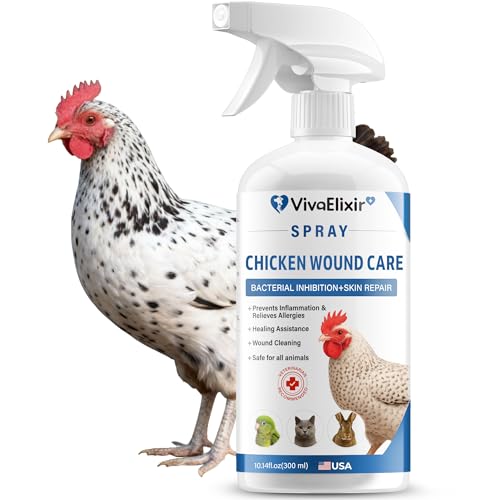
- Hypochlorous formula helps cleanse wounds and irritations
- Alcohol-free, dye-free, and non-toxic for daily use
- Works for chickens, ducks, and other birds
Best For: Everyday poultry wound care when you want a gentle cleansing spray
Decorative Self-Adhesive Bandages

- 24 sterile, latex-free bandages in four farm animal styles
- Strong adhesion with a flexible fit for everyday use
- Non-stick pad supports easier, more comfortable removal
Best For: Minor cuts and scrapes when you want a basic adhesive bandage set
Blue Barrier Ointment
Manna Pro Hen Healer Multi-Purpose Ointment

- Lanolin-based poultry ointment
- Blue color helps deter pecking
- Barrier against dirt and insects
Best For: Minor cuts, scrapes, and pecking injuries on poultry
Silver Care Spray
Wound Spray for Chicken with Colloidal Silver

- Antibiotic-free spray formula
- For pecking sores, bumblefoot, and cuts
- Direct application for poultry first aid
Best For: Simple spray care for minor chicken wounds and irritation
Gentle Daily Spray
Lemant Poultry Care Spray 8.5 oz

- Non-stinging no-rinse spray
- No egg withdrawal for laying hens
- For bumblefoot, pecking, and minor wounds
Best For: Everyday flock care and minor chicken skin recovery support
Silver Solution Spray
Patented Silver Wound Care Spray for Chickens

- Chelated silver and distilled water formula
- Safe to peck or lick after application
- Sprays on head, feet, wings, and beak
Best For: Gentle, no-sting spray care for active birds
Rapid Relief Spray
Dr. Orchard's Chicken Wound Spray

- Non-stinging spray for minor wounds and irritations
- Safe if pecked or accidentally ingested
- No egg withdrawal period for laying hens
Best For: Daily flock care with easy spray-on use
Advanced Care Spray
Chicken's Choice Poultry Wound Care

- Low-pH, antibiotic-free spray formula
- Peck and lick safe when used as directed
- No rinsing needed; spray and air dry
Best For: Easy daily poultry first aid with advanced spray care
Poultry First Aid Spray – Vetericyn Plus Poultry Care Spray
If you want chicken wound care bandages support without the hassle of wrapping every minor injury, this poultry care spray is a practical first-aid option. It’s designed for pecking sores, flank wounds, breast blisters, vent prolapses, frost bite, and bumblefoot, and it can be used a few times daily to help with skin repair.
Best For: Backyard flock owners who want a non-toxic, antibiotic-free spray for common chicken wounds and skin issues.
Pros:
- Helps with a wide range of poultry skin problems, including pecking injuries and bumblefoot
- Antibiotic free and non-toxic, with no egg withdrawal period mentioned
- Veterinarian recommended and made for easy at-home flock care
Cons:
- It’s a spray, so it does not provide a physical bandage or dressing
- May need repeated applications during the day for ongoing support
For minor wounds and irritated skin, this is a simple maintenance product rather than a wrap-and-cover solution. It makes sense when you want fast application and broad-use poultry care in one bottle.
Protective Aerosol Bandage – Neogen Ideal AluShield Aerosol Bandage
When chicken wound care bandages need to be fast and fuss-free, an aerosol bandage can be easier than traditional wraps for small cuts and abrasions. This water-resistant spray creates a protective barrier while still letting the wound breathe, and it’s meant to stay unobtrusive on animals in motion.
Best For: Minor cuts and abrasions on chickens or other animals when you want a breathable protective barrier.
Pros:
- Creates a protective barrier while still allowing the wound to breathe
- Water-resistant and designed for minor cuts and abrasions
- Simple application: clean the area, shake, and spray a thin layer
Cons:
- Best suited to minor wounds, not deeper injuries
- Spray format may be less precise than a physical bandage for very small spots
This is a useful option if you want wound coverage without tape, wraps, or bulky dressing. It’s especially appealing for animals that keep moving and would otherwise knock off traditional bandages.
Hypochlorous Wound Spray – Chicken Wound Spray 10.14 oz
For buyers comparing chicken wound care bandages and spray-on alternatives, this hypochlorous formula is aimed at keeping poultry skin clean and protected. It’s positioned for cuts, pecks, burns, bumblefoot, and vent prolapses, with a gentle formula that cleanses without stinging.
Best For: Poultry owners who want a gentle, non-toxic spray for everyday wound and skin care.
Pros:
- Uses hypochlorous acid to help cleanse wounds and irritations
- Alcohol-free, dye-free, and non-toxic with no withdrawal period required
- Suitable for chickens, ducks, and other birds
Cons:
- Spray-only format does not replace a physical bandage
- Designed for support and cleaning, not for heavy-duty wound coverage
This is a straightforward flock-care spray for everyday use when you need a gentle option around sensitive skin. It fits well in a first-aid kit for keeping minor injuries clean while supporting natural healing.
Decorative Self-Adhesive Bandages – BioSwiss Farm Animal Bandages
If you’re shopping for chicken wound care bandages for small cuts and scrapes, this bandage set focuses on simple, everyday coverage. The bandages are sterile, latex free, and shaped like farm animals, which can make minor wound care feel a little less stressful.
Best For: Minor cuts, scrapes, and everyday first aid when you want a fun, sterile adhesive bandage set.
Pros:
- 24 sterile bandages in four assorted farm animal styles
- Latex free with a non-stick absorbent pad for easier removal
- Strong adhesion and flexible fit for everyday use or travel kits
Cons:
- Made for general minor wound care, not poultry-specific treatment
- Small adhesive bandages may not suit larger chicken injuries
This is the most traditional bandage option in the group, but it’s aimed at people rather than birds. It works well as a first-aid supply for light, minor wounds where simple adhesive coverage is all you need.
Blue Barrier Ointment – Manna Pro Hen Healer Multi-Purpose Ointment
If you’re comparing chicken wound care bandages and topical options, Manna Pro Hen Healer is a simple ointment meant for minor cuts, scrapes, sores, and pecking injuries on poultry. It creates a protective barrier against dirt and insects, and its blue color can help discourage pecking while supporting the healing process.
Best For: Poultry keepers who want a lanolin-based ointment for small injuries on body, legs, combs, wattles, and other exposed areas.
Pros:
- Lanolin-based formula designed for minor cuts, scrapes, lacerations, and sores
- Blue ointment color helps discourage pecking
- Creates a barrier to insects and dirt
- Made for use on all classes of poultry
Cons:
- Works as an ointment, not a true bandage or wrap
- Best suited to minor injuries rather than serious wounds
- Requires direct application to the affected area
Overall, this is a practical first-aid ointment for backyard flocks that need surface protection and support for everyday scrapes. It’s especially useful when you want a simple, poultry-specific treatment that can be used on several parts of the bird.
Silver Care Spray – Wound Spray for Chicken with Colloidal Silver
For buyers looking at chicken wound care bandages alternatives, this silver spray is a direct-applied option for pecking sores, bumblefoot, cuts, and other minor wounds. The formula is described as antibiotic-free and made with colloidal nano silver and deionized water, so it fits a straightforward poultry first-aid routine without requiring a wrap or dressing.
Best For: Chicken owners who want a sprayable, no-antibiotic wound care option for small injuries and routine flock first aid.
Pros:
- Spray format is easy to apply directly to the injury
- Antibiotic-free formula with colloidal nano silver
- Can be used on head, beak, feet, and wings
- Useful for pecking sores, bumblefoot, and cuts
Cons:
- Not a physical bandage or covering
- Needs shaking before use
- Manufacturer advises consulting a specialist before use
This is a convenient choice if you want a flock-first-aid spray that can be kept on hand for many minor issues. It’s best viewed as a supportive topical product rather than a replacement for veterinary care in more serious cases.
Gentle Daily Spray – Lemant Poultry Care Spray 8.5 oz
If you want chicken wound care bandages alternatives for everyday flock use, this Lemant spray is designed as a non-stinging, no-rinse option for minor wounds, pecking irritations, bumblefoot care, and vent-area support. It’s made for routine poultry skin care and is described as safe if pecked or ingested, with no egg withdrawal for laying hens.
Best For: Backyard flocks that need a gentle, spray-and-go skin recovery aid for daily care and minor injuries.
Pros:
- Non-stinging and easy to use as a no-rinse spray
- Safe for hens, roosters, chicks, and mixed flocks
- No egg withdrawal for laying hens
- Long-lasting bottle with over 2,000 sprays
Cons:
- Spray care may not suit injuries that need a physical dressing
- Requires direct application to exposed skin
- Primarily supports minor wounds and routine care
This is a strong pick for keepers who prefer a gentle, low-fuss poultry care spray for recurring small issues. It slots well into a chicken first aid kit when you want easy application and everyday flock comfort.
Silver Solution Spray – Patented Silver Wound Care Spray for Chickens
If you want chicken wound care bandages alternatives that are easy to apply, this silver wound spray is a practical choice for minor cuts, pecking sores, bumblefoot, burns, and skin irritations. The spray format lets you saturate the area quickly, including hard-to-reach spots like the head, beak, feet, and wings, without needing creams or ointments.
Best For: Backyard flock owners who want a gentle, no-sting spray they can use on active birds and feathered areas.
Pros:
- Patented chelated silver solution with only silver and distilled water
- Safe for birds to peck or lick during and after application
- Can be sprayed from up to 6 feet away for easier coverage
- FDA registered and made in the USA under FDA and GMP guidelines
Cons:
- Spray format is better for cleansing and protecting than for covering like a bandage
- May require repeated applications through the day for ongoing care
- Not a multi-step wound kit; it is a single-product spray solution
Overall, this is a simple, low-fuss option for poultry owners who want a gentle spray in their chicken wound care routine. It stands out most for ease of use and broad application on skin and feather areas.
Rapid Relief Spray – Dr. Orchard's Chicken Wound Spray
For chicken wound care bandages shoppers who prefer a spray over dressing materials, Dr. Orchard’s Chicken Wound Rapid Relief is built for daily flock use. It is designed for minor wounds, pecking irritations, bumblefoot, vent-area discomfort, and feather regrowth support, with a non-stinging formula that is safe if pecked or accidentally ingested.
Best For: Owners looking for an easy daily-use poultry spray with no egg withdrawal for laying hens.
Pros:
- Non-stinging, antibiotic-free, and steroid-free formula
- No egg withdrawal period for laying hens
- Easy no-rinse spray application for coops, brooders, and runs
- Long-lasting bottle with over 2,500 sprays
Cons:
- Primarily a spray treatment, not a physical bandage replacement
- Directions call for multiple daily applications on active wounds
- Best suited to minor wound and irritation support rather than heavy-duty coverage
This is a strong everyday option if you want simple poultry skin support without complicated handling. Its biggest advantages are convenience, flock-wide use, and the no egg-withdrawal detail for hens.
Advanced Care Spray – Chicken's Choice Poultry Wound Care
If you’re comparing chicken wound care bandages and want a spray that can stand in for simple wound coverage, Chicken’s Choice Wound Care is made for bumblefoot, vent prolapse, pecking sores, burns, and skin irritations. It is a ready-to-use, low-pH formula that is designed to be peck and lick safe when used as directed, with no rinsing needed.
Best For: Chicken keepers who want an advanced wound spray that is easy to apply and made for daily poultry first aid.
Pros:
- Low-pH, antibiotic-free formula with proprietary ProH Technology
- Peck and lick safe when used as directed
- No rinsing needed; just spray and allow to dry
- Made in the USA and described as biodegradable and hypoallergenic
Cons:
- Sold as a spray, so it does not function like a true bandage
- Directions mention avoiding the eyes because it may sting
- Refill-style directions may be less straightforward than a standard one-step spray
Overall, this product is a good fit for owners who want a straightforward spray with a more specialized wound-care positioning. It leans toward convenience and recovery support rather than physical wound covering.
How We Picked These Chicken Wound Care Bandages
We focused on products that are commonly used for poultry wound protection, including spray-on barriers, skin-support formulas, and self-adhesive options. Selection priorities included ease of application, suitability for common chicken injuries, ingredient style, and usefulness for backyard coops as well as small flocks.
We also looked for products that can help with issues chicken owners face most often: minor cuts, pecking wounds, scratched skin, vent-area irritation, and bumblefoot support. Since the best choice depends on the injury, we favored a mix of formats rather than one “universal” solution.
Quick Comparison: Which Type Works Best?
For quick coverage on open skin, spray products are usually the simplest choice. They are easy to apply to skittish birds and can create a light protective layer over the wound. Ointments and balms are better when you want a thicker, more hands-on treatment for localized spots. Bandage-style products are useful when you need physical coverage, but they may require more handling and careful placement.
In short: choose sprays for speed, ointments for targeted care, and bandage-style options when you need a more visible protective layer on a manageable wound.
Key Buying Factors for Chicken Wound Care Bandages
1. Injury Type
Match the product to the problem. Pecking sores, scratches, and minor cuts often do well with spray treatments. Bumblefoot and more sensitive foot issues may benefit from a more controlled application or protective covering. Vent-area concerns call for products that are easy to apply without excessive rubbing.
2. Application Style
Some birds tolerate aerosols better than touch application, while others need a more precise ointment. If you treat nervous chickens, a fast-drying spray can save time and reduce stress for both you and the bird.
3. Protection and Drying Time
Look for a formula that helps shield the wound without staying overly wet or attracting debris. Faster drying can be especially helpful in dusty coops or muddy runs.
4. Flock Safety and Ease of Use
Choose products designed for poultry use and follow label directions closely. Simpler application usually means better consistency, especially if you care for multiple birds.
Who Should Buy Which Chicken Wound Care Bandages?
If you want the fastest all-purpose option for minor injuries, choose a spray. If you need more targeted care for a specific spot, an ointment or skin treatment may be a better fit. If you keep a larger backyard flock and want something easy to use on multiple birds, prioritize Chicken Wound Care Bandages and sprays that apply quickly and dry fast.
For the best results, keep your chosen product in a first-aid kit before injuries happen. That way, you can act quickly when pecking damage, scrapes, or foot issues show up.