Choosing the right poultry feed pellet machine can make feed prep faster, more consistent, and better matched to your birds’ age and diet.
Below, we focus on the specs that matter most so you can compare capacity, die size, power, and build quality with confidence.
Best 10 Poultry Feed Pellet Machine Picks for 2026
VEVOR 5 mm 3KW Pellet Mill

- 3KW motor with 5 mm disc and 3 rollers
- Steel build with overload protection and oil window
- Built for poultry, livestock, hay, straw, and corn
Best For: Large farm batches and durable daily use
Electric 3.5 mm Feed Pellet Maker

- 650W motor with 3, 3.5, and 8 mm dies
- Stainless steel body is removable and easy to clean
- Compact 7.5 lb unit for home and hobby use
Best For: Backyard poultry keepers and hobby farms
5.5KW 110V Pellet Mill

- 220 to 440 lb/h output with six die sizes
- 5.5KW pure copper motor for steady torque
- Built with wear-resistant chromium-manganese steel
Best For: Higher-volume farms needing multiple pellet sizes
VEVOR 4 mm 3KW Pellet Mill
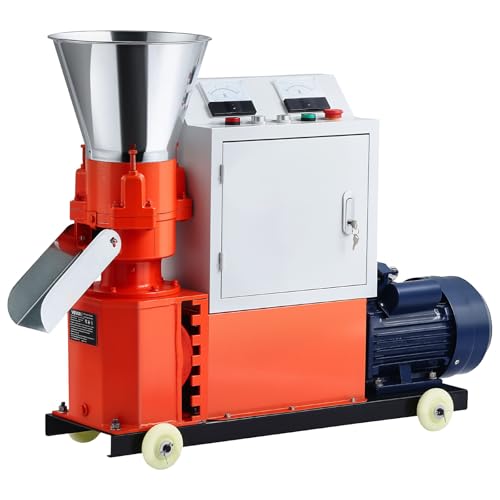
- 3KW motor with a 4 mm grinding disc
- 3 pressure rollers and steel construction
- Safety controls with overload protection
Best For: Smaller 4 mm pellets for poultry and farm animals
3-Head Roller Pellet Mill
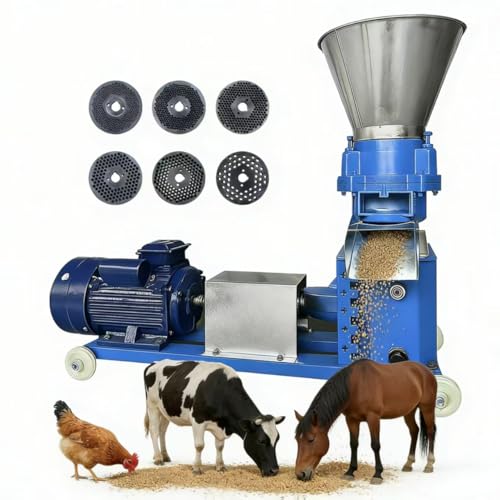
- 5.5KW motor with up to 200kg/h output
- Six disc sizes from 2.5mm to 8mm
- Direct-wire setup requires proper main power connection
Best For: Higher-output farms needing adjustable pellet sizes
VEVOR 3KW Pellet Granulator
- 3KW motor with a 6mm grinding disc
- Emergency stop, overload protection, and monitoring panel
- Four wheels for easier movement around the farm
Best For: Poultry and livestock users wanting safety features
5.5KW Triple Roller Mill

- 5.5KW motor with up to 200kg/h output
- Six disc sizes from 2.5mm to 8mm
- Triple rollers help improve pellet density
Best For: Farms needing multiple pellet sizes and strong throughput
4-Head Roller Pellet Mill with 6 Disc Sizes
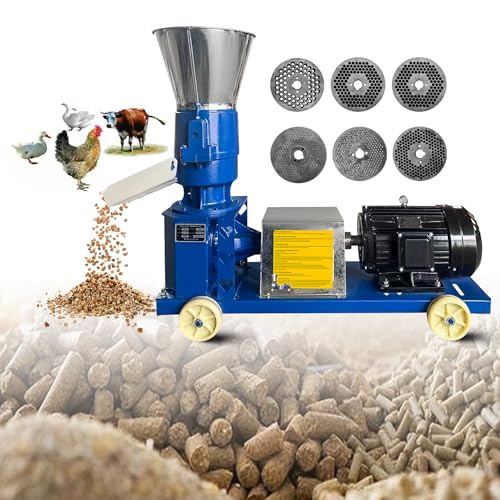
- 4 quenched steel rollers for durability
- Six pellet sizes from 2.5mm to 8mm
- Up to 507 lb/h output with 5.5KW motor
Best For: Farms needing higher output and multiple pellet sizes
3-Roller Pellet Maker with Air Switch

- 220-440 lb/h output range
- Six die sizes for different feed needs
- Air switch, splash plate, and voltage display
Best For: Buyers wanting a versatile, farm-ready midrange machine
3-Head Roller Pellet Mill with 440 lb/h Output

- 3 heavy-duty rollers for consistent pellet shaping
- Six pellet sizes from 2.5mm to 8mm
- Up to 440 lb/h with a 5.5KW motor
Best For: Buyers wanting a straightforward machine with solid output
Heavy-Duty Farm Pick – VEVOR 5 mm 3KW Pellet Mill
If you need a poultry feed pellet machine for larger farm batches, this VEVOR mill is built for serious throughput. Its 3KW pure copper motor, 5 mm grinding disc, and 3 pressure rollers are aimed at producing consistent pellets from poultry feed ingredients as well as hay, straw, and corn.
Best For: Poultry and livestock owners who want a heavy-duty pellet mill for larger-volume feed production.
Pros:
- 3KW single-phase pure copper motor for efficient pellet production
- 5 mm disc with 3 press rollers for consistent 5 mm pellets
- Steel construction with high-temperature quenching for wear resistance
- Safety-focused controls, overload protection, and oil-level window
Cons:
- At 223.1 pounds, it is not a lightweight machine
- Requires confirming grinding disc specifications before purchase
- Designed as a complete machine, with no additional accessory support
This is the strongest option in the group if you want a durable, power-driven machine for regular farm use. The wheels and enlarged ports help with handling, but this model makes the most sense when output and durability matter more than compact size.
Compact Home Option – Electric 3.5 mm Feed Pellet Maker
This poultry feed pellet machine is designed for home courtyards, balconies, gardens, and hobby farms. With a 650W motor and interchangeable 3 mm, 3.5 mm, and 8 mm dies, it gives you flexibility to make small-batch pellets from ingredients like cornmeal, vegetable fibers, fruits, and fresh meat.
Best For: Small-scale users who want a compact pellet maker for customized home feed recipes.
Pros:
- 650W motor handles a range of home feed ingredients
- Three interchangeable die sizes for different pellet needs
- Stainless steel body resists corrosion and is easy to clean
- Compact 7.5 lb design fits small spaces well
Cons:
- Better suited to small-scale use than heavy production
- Runs at 140 RPM, so it is gentler than industrial machines
- Not intended for users who need very high hourly output
For hobbyists or backyard keepers, this model stands out for convenience and flexibility rather than raw power. It is a practical way to make customized pellets for poultry and other small livestock without needing a large footprint.
High-Capacity Workhorse – 5.5KW 110V Pellet Mill
When you need a poultry feed pellet machine with more output, this 5.5KW pellet mill is built for higher-volume work. It handles multiple die sizes from 2.5 mm to 8 mm and is rated for 220 to 440 lb per hour, making it suitable for farms that want to process different feed sizes for birds and other animals.
Best For: Users who need high hourly output and multiple pellet sizes for mixed farm use.
Pros:
- 220 to 440 lb/h processing capacity for bigger batches
- Six die sizes from 2.5 mm to 8 mm for feed variety
- 110V 5.5KW pure copper motor for steady power output
- Chromium-manganese steel parts for wear resistance
Cons:
- Very heavy at 271 pounds
- Larger footprint may be less convenient in tight spaces
- Best suited to users who can take advantage of its high capacity
This model is the best fit when production speed and die versatility matter more than portability. The enlarged outlet and voltage screen add practical usability, while the durable materials support long-term continuous operation.
Balanced Farm Choice – VEVOR 4 mm 3KW Pellet Mill
If you want a poultry feed pellet machine focused on smaller pellet size, this VEVOR 4 mm model is a practical middle-ground. It uses a 3KW pure copper motor, a 4 mm grinding disc, and 3 pressure rollers to produce pellets for chickens, ducks, pigs, sheep, and other farm animals.
Best For: Buyers who want a 4 mm pellet size for poultry and mixed farm feed.
Pros:
- 3KW motor and 3 rollers support efficient pellet making
- 4 mm disc is suited to smaller feed pellets
- Steel components are quenched for wear resistance and heat tolerance
- Control panel includes emergency stop, overload protection, and monitoring display
Cons:
- Requires confirming grinding disc specifications before buying
- Heavy at 223.1 pounds
- Accessory support is not included beyond the complete machine
This option makes sense if your feed plan calls for smaller pellets and a robust industrial-style build. It keeps the same practical safety and mobility features as the brand’s larger model, but with a 4 mm output more suited to certain poultry applications.
Heavy-Duty 5.5KW Option – 3-Head Roller Pellet Mill
If you need a poultry feed pellet machine for higher-output farm use, this 5.5KW model is built around speed, consistency, and multiple pellet sizes. It includes three heavy-duty head rollers, six grinding discs from 2.5mm to 8mm, and an enlarged feed port to support steady production for poultry and other livestock feed.
Best For: Farms and small industrial users that want adjustable pellet sizes, stable shaping, and up to 200kg/h output.
Pros:
- 5.5KW motor with copper wire thickened coil for efficient operation
- 3-head roller design helps improve pellet density and reduce clogging
- Six grinding disc sizes support different poultry and livestock feeding stages
- Enlarged feed port makes loading material easier during use
Cons:
- Must be wired directly to the main power supply
- Requires a 63A+ breaker and proper 10 AWG copper wiring
- Not suited for users who need plug-and-play portability
This is a practical choice if your priority is throughput and versatility rather than convenience. The machine is aimed at direct-wired, higher-demand setups where pellet size control and continuous feed shaping matter.
Safer 6mm Choice – VEVOR 3KW Pellet Granulator
This poultry feed pellet machine focuses on controlled 6mm pellet production with a 3KW pure copper motor, three pressure rollers, and a single-disc setup designed for efficiency. It also adds safety and convenience features like an emergency stop, overload protection, a visible oil window, and four wheels for easier movement.
Best For: Poultry and livestock owners who want a 6mm pellet machine with built-in monitoring and safety controls.
Pros:
- 3KW single-phase pure copper motor supports efficient pellet making
- 3 pressure rollers and 6mm disc are geared toward consistent pellet output
- Control panel includes start/stop, status light, and emergency stop
- 4 wheels make it easier to move between work areas
Cons:
- Produces 6mm pellets only, so size flexibility is limited
- Heavier build at 223.1 pounds may be less convenient for frequent repositioning
- Best suited to users who need electric power and a dedicated workspace
Compared with simpler feed mills, this model stands out for its safety monitoring and mobility features. It is a strong pick if you want dependable poultry feed pellet machine performance with less guesswork during operation.
High-Output 6-Disc Model – 5.5KW Triple Roller Mill
If you want a poultry feed pellet machine with more size options, this 5.5KW model adds six grinding discs and a triple roller layout for steady pellet shaping. It is designed for direct-wired use and is rated for up to 200kg/h, making it suitable for farms that need a stronger production pace.
Best For: Buyers who want a high-output machine with six pellet sizes and stable continuous feeding.
Pros:
- 5.5KW motor is rated for strong output and efficient feeding
- Six grinding discs cover 2.5mm through 8mm pellet sizes
- Triple roller design helps improve density and reduce clogging
- Enlarged feed port supports easier material loading
Cons:
- Requires direct connection to the main power supply
- Needs a 63A+ breaker and proper 10 AWG copper wiring
- Not ideal if you need a simple plug-in machine
For users comparing pellet mills by output and flexibility, this model is very similar in capability to other high-capacity units but keeps the focus on multi-size pellet production. It makes sense when you need a poultry feed pellet machine that can also serve other livestock and farm feed needs.
Heavy-Duty High-Output Choice – 4-Head Roller Pellet Mill with 6 Disc Sizes
If you need a poultry feed pellet machine for steady farm production, this 110V model is built around output and consistency. The 4-head roller setup, 5.5KW motor, and six die sizes give you flexibility to make pellets for poultry and other livestock at different growth stages.
Best For: Farms that want a higher-capacity pellet machine with multiple pellet-size options and a rugged roller setup.
Pros:
- 4 steel rollers are quenched for added hardness and durability.
- Six grinding disc sizes: 2.5mm, 3mm, 4mm, 5mm, 6mm, and 8mm.
- High-efficiency 5.5KW motor with stated output up to 507 lb/h.
- Enlarged feed port is designed to make feeding easier during use.
Cons:
- Requires direct wiring to the main power supply.
- Needs a 63A or higher breaker and 10 AWG copper wire.
- Large and heavy at 242 pounds, so it is not a portable option.
This is the strongest option here if throughput matters more than compact size. The adjustable roller-to-die spacing and broad disc selection make it a practical fit for mixed poultry and livestock feed work.
Balanced Farm Workhorse – 3-Roller Pellet Maker with Air Switch
Dewinston 110V Pellet Mill Machine 3 Rollers Pellet Maker Machine 2.5/3/4/5/6/8mm
Check Price On AmazonThis poultry feed pellet machine is a good middle-ground choice if you want useful output without moving all the way to the biggest unit. It offers 220-440 lb/h capacity, six die sizes, a 5.5KW copper motor, and practical safety-focused touches like an air switch and splash plate.
Best For: Buyers who want a versatile, farm-ready pellet maker with strong output and easier day-to-day control.
Pros:
- Produces 220-440 lb/h, which is solid for poultry and mixed animal feed.
- Comes with six discs: 2.5mm, 3mm, 4mm, 5mm, 6mm, and 8mm.
- Built-in voltage display helps with real-time monitoring.
- Includes an air switch and splash plate for a safer, tidier setup.
Cons:
- Uses 3 rollers instead of the 4-roller design found on some alternatives.
- Still requires direct wiring to the main power supply.
- Needs a 63A or higher breaker and 10 AWG copper wire.
For many farms, this model stands out as a practical compromise between capacity and control. The included monitoring features and multiple disc sizes make it easier to match pellet size to your feed plan.
Practical Mid-Range Pick – 3-Head Roller Pellet Mill with 440 lb/h Output
If you want a poultry feed pellet machine that keeps the feature set straightforward, this 110V unit focuses on core essentials. It pairs a 5.5KW motor with 3 heavy-duty rollers and six grinding disc sizes, making it suitable for producing pellets for poultry, livestock, and other feed applications.
Best For: Buyers who want a no-frills pellet mill with solid output and standard pellet-size options.
Pros:
- 3 heavy-duty head rollers help support uniform pellet shaping.
- Six disc sizes cover 2.5mm through 8mm.
- Rated maximum output is 200kg/h or 440 lb/h.
- Enlarged feed port makes loading easier.
Cons:
- Still needs direct wiring to the main power supply.
- No voltage display is listed in the supplied notes.
- Lower stated output than the higher-capacity 4-roller model.
This model is a sensible choice if you want the standard sizes and strong motor support without extra complexity. Its 3-roller design and adjustable roller gap make it a straightforward option for regular feed production.
How We Picked the Best Poultry Feed Pellet Machine
We prioritized practical factors that affect daily use: motor power, production rate, die options, roller design, material durability, and ease of operation. For a Poultry Feed Pellet Machine, consistency matters as much as raw speed, so we looked for models that can produce uniform pellets without unnecessary complexity.
Quick Comparison
In general, smaller-die machines are better for finer poultry rations, while multi-die models give you more flexibility across chicks, growers, and mixed livestock feed. Higher-wattage units and multi-roller designs usually support better throughput, but they also tend to demand more stable power and more careful setup.
Key Buying Factors for a Poultry Feed Pellet Machine
Die Size and Pellet Diameter
Choose a die diameter that matches your feed goals. Smaller pellets are typically easier for young poultry to consume, while larger dies may work better for broader livestock use or mixed feed formulas.
Motor Power and Voltage
Confirm whether the machine matches your available outlet. Many home and small-farm buyers need 110V compatibility, while 240V units can suit heavier-duty setups. More power generally helps with tougher ingredients and steadier output.
Roller and Discs Configuration
More rollers or a stronger roller setup can improve compression and feed consistency. Multi-disc machines are often a better fit if you want flexibility across different pellet sizes without buying multiple units.
Build Quality and Safety Features
Stainless steel components, splash plates, and air switches can improve convenience and cleanup. These details matter if the machine will be used frequently or in a busy feed-prep area.
Output and Batch Size
Estimate how much feed you need per day. A compact Poultry Feed Pellet Machine may be enough for backyard flocks, while higher-output models are better suited for small farms, co-ops, or recurring batch production.
Who Should Buy Which Poultry Feed Pellet Machine?
Backyard poultry keepers usually benefit from smaller, simpler machines with modest output and easy cleanup. Small farms and multi-animal operations should look for adjustable dies, stronger motors, and higher production rates. If you feed different bird ages or want more control over pellet size, choose a model with multiple die options and enough power to maintain consistent performance.
For the best long-term fit, match the machine to your flock size, feed recipe, and available power first, then compare convenience features like rollers, switches, and body materials.