Finding the right poultry wound care ointment can make a big difference when your flock has cuts, pecking sores, bumblefoot, or irritated skin. The best options support cleaner, simpler at-home care.
Below, we focus on practical choices that help protect wounds, promote recovery, and fit real-world poultry handling needs.
Best 10 Poultry Wound Care Ointment Picks for 2026
Poultry First-Aid Spray
Vetericyn Plus Poultry Care Spray

- Antibiotic-free, non-toxic formula
- Works on pecking sores, bumblefoot, and more
- Spray application is quick and easy
Best For: Chicken keepers who want a simple, everyday first-aid spray
Natural Balm Pick
ChicK'N Swell Premium Poultry Balm

- Balm with coconut oil, shea butter, and vitamin E
- Helps with minor wounds and frostbite prevention
- Made as a natural, toxin-free care option
Best For: Chicken owners wanting a natural balm for skin care and cold-weather protection
Silver Spray Option
Wound Spray for Chicken with Silver

- Colloidal nano silver formula with no antibiotics
- Works on cuts, pecking sores, and bumblefoot
- Compact spray for home use or travel
Best For: Bird owners needing a simple spray for minor wound care
Barrier Gel Choice
Vetericyn Plus Wound Dressing Gel

- Thick gel forms a protective wound barrier
- No steroids, antibiotics, or toxic ingredients
- Works under bandages and dressings
Best For: Owners who need a stay-put gel for wound coverage and dressing changes
Blue-Barrier Ointment
Manna Pro Hen Healer Multi-Purpose Ointment

- Lanolin-based ointment for minor cuts and scrapes
- Blue color helps discourage pecking
- Creates a barrier to insects and dirt
Best For: Minor poultry wounds with added pecking deterrence
Silver Spray Relief
Chicken Wound Spray for Chickens & Birds

- Chelated silver and distilled water formula
- Non-stinging spray for wounds and irritations
- Can be applied from up to 6 feet away
Best For: Quick spray-on care for multiple poultry skin issues
Daily Skin Support Spray

- Non-stinging spray for minor wounds and irritations
- No egg withdrawal for laying hens
- Over 2,000 sprays per bottle
Best For: Routine poultry skin care and easy daily flock use
Advanced Wound Care Spray
Chicken's Choice Wound Care for Chickens & Birds

- Low-pH, antibiotic-free spray for poultry skin care
- Targets bumblefoot, vent prolapse, pecking sores, burns
- No-rinse, peck- and lick-safe when used as directed
Best For: Backyard flocks needing simple, ready-to-use first aid spray
Rapid Relief Spray
Dr. Orchard's Chicken Wound Spray

- Gentle, non-stinging spray for daily flock care
- Safe for hens, roosters, chicks, and mixed flocks
- No egg withdrawal period for laying hens
Best For: Daily care for minor poultry wounds and pecking irritation
Hypochlorous Healing Spray
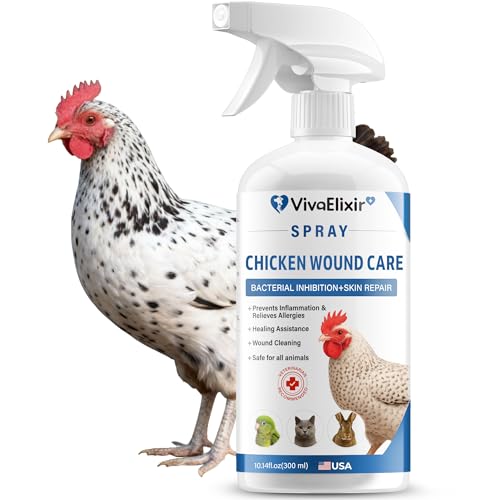
- Hypochlorous acid formula for gentle cleansing
- Supports cuts, pecks, burns, bumblefoot, and prolapses
- No withdrawal period; suitable for chickens, ducks, and birds
Best For: Keepers wanting a broad-use, gentle spray for flock first aid
Poultry First-Aid Spray – Vetericyn Plus Poultry Care Spray
If you need poultry wound care ointment-style support in a fast, easy spray, this Vetericyn Plus option is built for common chicken injuries and skin issues. It’s designed for pecking sores, flank wounds, breast blisters, vent prolapse, frost bite, and bumblefoot, making it a practical addition to a flock first-aid kit.
Best For: Keepers who want a non-toxic, antibiotic-free spray for everyday chicken wound care and skin repair.
Pros:
- Helps with a wide range of poultry skin problems and minor wounds.
- Antibiotic free and non-toxic, with no egg withdrawal period noted.
- Veterinarian recommended and positioned as an at-home flock care staple.
- Convenient spray format for quick, repeated use a few times daily.
Cons:
- Spray format may be less targeted than a true ointment for thick coverage.
- Best suited to minor wounds and skin repair, not severe injuries.
For routine poultry wound care, this is a straightforward pick if you prefer a cleaner, no-withdrawal option over traditional medicated products. The spray makes it easy to apply over multiple problem areas without much fuss.
Natural Balm Pick – ChicK'N Swell Premium Poultry Balm
This poultry wound care ointment is a balm-style option for keepers who want a more emollient, natural-feeling product for skin abrasions, wounds, and cold-weather protection. Chick’N Swell is formulated with coconut oil, shea butter, vitamin E, calendula, lavender, rosemary essential oil, and sulfur to support healing and help keep legs, feet, and combs soft.
Best For: Owners looking for a natural balm for minor wounds, dry leg scales, and frostbite prevention.
Pros:
- Balm texture helps moisturize and protect skin on legs, feet, and combs.
- Includes coconut oil, shea butter, vitamin E, and essential oils.
- Designed to help support healing of minor wounds and prevent frostbite.
- 100% natural and free of toxic products, according to the notes.
Cons:
- Balm format may be slower to apply than a spray for quick treatment.
- Focused on minor wounds and skin maintenance rather than serious injuries.
This is a good choice if your priority is a soothing, protective balm rather than a liquid treatment. It stands out for cold-season care and for keeping rough chicken skin more supple.
Silver Spray Option – Wound Spray for Chicken with Silver
If you’re comparing poultry wound care ointment alternatives, this silver spray is a simple liquid treatment for pecking sores, bumblefoot, cuts, and other minor wounds. It uses colloidal nano silver with deionized water and is marketed as an antibiotic-free, GMO-free option for birds.
Best For: Bird owners who want a straightforward spray for minor wounds and irritation.
Pros:
- Antibiotics-free formula with colloidal nano silver.
- Suitable for pecking sores, bumblefoot, cuts, and irritation.
- Can be applied 2–4 times daily and used at home or on trips.
- Packaged as a compact 4-ounce bottle for first-aid kits.
Cons:
- Requires shaking before each use to mix properly.
- Notes frame it as a complementary treatment, not a replacement for specialist care.
This spray is best for keepers who want a no-antibiotic, easy-to-carry treatment for everyday bird injuries. The silver-based formula and direct application make it a practical first-aid shelf item.
Barrier Gel Choice – Vetericyn Plus Wound Dressing Gel
For buyers who prefer a thicker poultry wound care ointment alternative, this dressing gel creates a protective barrier over cuts, abrasions, sores, and irritated skin. It’s designed for use under bandages and wound dressings, making it a useful pick when you want a gel that stays in place.
Best For: Pet owners who want a thick, easy-to-apply gel for wound dressing and bandage support.
Pros:
- Thick gel creates a barrier and can be used under dressings.
- Free of steroids, antibiotics, and toxic ingredients.
- Safe if licked or ingested, according to the product notes.
- Useful for cuts, scrapes, abrasions, burns, sores, and post-surgical wounds.
Cons:
- Not poultry-specific, so it’s broader than dedicated chicken products.
- Gel format may be less convenient than a spray for quick touch-ups.
This is a strong choice if you want a dressing-style product that can help protect wounds while bandaged. Its thicker texture makes it especially useful when you want more of a stay-put barrier than a liquid treatment.
Blue-Barrier Ointment – Manna Pro Hen Healer Multi-Purpose Ointment
If you want a poultry wound care ointment for small cuts, scrapes, and pecking injuries, Manna Pro Hen Healer is a simple lanolin-based option made for use on poultry body areas, legs, head, face, combs, and wattles. Its blue color is designed to help discourage pecking while forming a barrier against insects and dirt.
Best For: Treating minor poultry skin injuries while helping reduce pecking in the flock.
Pros:
- Lanolin-based ointment for minor cuts, lacerations, scrapes, and sores
- Creates a barrier to insects and dirt
- Blue color can help prevent pecking
- Suitable for all classes of poultry
Cons:
- Intended for minor wounds rather than more serious injuries
- Requires direct application to the affected area
This is a practical pick if you prefer a traditional ointment texture and want a multi-purpose poultry skin treatment that can be used across several parts of the bird.
Silver Spray Relief – Chicken Wound Spray for Chickens & Birds
This poultry wound care ointment alternative is a spray, which can be easier to apply when you need to cover chicken skin issues quickly. The patented silver solution is made with chelated silver and distilled water, and it is meant for wounds, pecking sores, bumblefoot, cuts, burns, and skin irritations across skin and feather areas.
Best For: Fast, no-sting spray coverage for a wide range of poultry skin problems.
Pros:
- Can be applied to head, beak, feet, wings, and feathered areas
- Non-stinging formula with only chelated silver and distilled water
- Spray or stream option allows application from up to 6 feet away
- FDA registered and made in the USA
Cons:
- Spray format may not suit users who prefer a thicker ointment
- Best for topical care, not for severe injuries needing veterinary attention
If you want simple application and broad coverage, this is a strong choice for keeping in a chicken first aid kit. It stands out for easy use, non-stinging application, and the ability to treat hard-to-reach spots.
Daily Skin Support Spray – Lemant Poultry Care Spray
For buyers looking for a poultry wound care ointment alternative that fits routine flock care, Lemant Poultry Care Spray is a gentle no-rinse spray for minor wounds, pecking irritations, bumblefoot care, and vent-area support. It is antibiotic- and steroid-free, and the notes say it is safe if pecked or ingested, with no egg withdrawal for laying hens.
Best For: Everyday flock skin support with easy spray-and-go use.
Pros:
- Non-stinging spray for daily poultry care
- No egg withdrawal for laying hens
- Antibiotic- and steroid-free formula
- Over 2,000 sprays per bottle for long-lasting use
Cons:
- Spray format may not appeal to shoppers wanting an ointment
- Designed for gentle support rather than heavy-duty wound treatment
This is a convenient addition to a chicken first aid kit if you want an easy product for routine checks, feather regrowth periods, and minor skin issues without disrupting laying cycles.
Advanced Wound Care Spray – Chicken's Choice Wound Care for Chickens & Birds
If you want poultry wound care ointment-style support in a spray format, Chicken’s Choice Wound Care is built for common flock issues like bumblefoot, vent prolapse, pecking sores, burns, and other skin irritations. It uses a low-pH, antibiotic-free formula designed to cleanse without harsh chemicals, and it’s made to be easy to apply directly to the affected area.
Best For: Backyard chicken keepers who want a ready-to-use, no-rinse spray for routine flock first aid.
Pros:
- Ready-to-use spray; no mixing required for normal application.
- Designed for common poultry issues including bumblefoot, pecking sores, burns, and vent prolapse.
- No bandages required when used as directed, and it’s peck- and lick-safe.
- Biodegradable, hypoallergenic, and made in the USA.
Cons:
- Directions note it may sting if it gets in the eyes.
- Full treatment requires repeated use and cleaning of debris from the wound.
- It’s a spray, not a traditional ointment.
This is a practical pick if you want simple flock-first-aid care with a focus on cleanliness and easy daily application. The formula is positioned for regular use on minor wound and skin problems without strong odors or staining.
Rapid Relief Spray – Dr. Orchard's Chicken Wound Spray
Dr. Orchard’s Chicken Wound Spray is a poultry wound care ointment alternative for keepers who prefer a gentle spray for daily flock support. It’s made for minor wounds, pecking irritations, bumblefoot, vent-area discomfort, and feather regrowth, with a non-stinging formula that’s described as safe if pecked or accidentally ingested.
Best For: Chicken owners who want a no-rinse, everyday spray for minor wounds and skin irritation.
Pros:
- Non-stinging and designed for daily poultry care.
- Safe for hens, roosters, chicks, and mixed flocks.
- No egg withdrawal period for laying hens.
- Long-lasting bottle with over 2,500 sprays.
Cons:
- It’s aimed at minor wounds and support care, not major injuries.
- Directions call for frequent application when treating active problems.
- Like other sprays, it requires clearing feathers and debris before use.
This is a straightforward chicken first-aid option if you want something gentle enough for routine use around the coop. The no-rinse application and no egg-withdrawal note make it especially convenient for laying flocks.
Hypochlorous Healing Spray – Chicken Wound Spray
This chicken wound spray offers poultry wound care ointment-style cleaning and skin support in a hypochlorous acid formula. It’s intended for cuts, pecks, burns, bumblefoot, and vent prolapses, and the brand emphasizes that it cleanses without stinging while helping reduce redness and swelling.
Best For: Poultry keepers who want a gentle hypochlorous spray for broad first-aid use.
Pros:
- Hypochlorous acid formula is non-toxic, alcohol-free, and dye-free.
- Made for a wide range of poultry issues, including cuts, pecks, burns, and vent prolapses.
- No withdrawal period required.
- Suitable for chickens, ducks, and other birds.
Cons:
- Product details focus on the formula, but not on scent or staining claims.
- As a spray, it may not suit buyers specifically looking for an ointment.
- Directions and bottle-use details are less specific than some competing options.
This is a strong all-purpose pick if you want a simple, non-stinging spray for everyday bird care. Its hypochlorous formula and broad species compatibility make it easy to keep in a basic flock first-aid kit.
How We Picked the Best Poultry Wound Care Ointment Options
We focused on products that are commonly used for poultry skin support, wound protection, and easy application. Priority went to formulas that are suited for fast flock care, such as sprays, gels, and balms that can reach feathers, vents, feet, and hard-to-treat areas. We also favored products with clear use cases for cuts, pecking injuries, bumblefoot, burns, and minor skin irritation.
Quick Comparison
Sprays are usually the fastest for broad coverage and nervous birds. Gels and balms can stay in place longer on localized spots and may be better when you want a thicker barrier. If you need a Poultry Wound Care Ointment for repeated daily treatment, consider texture, ease of cleanup, and whether the product is designed for sensitive areas like the vent or foot pads.
Key Buying Factors for Poultry Wound Care Ointment
Type of Wound
Match the formula to the problem. A light spray may be enough for minor scrapes or irritated skin, while a thicker ointment or gel is often more practical for bumblefoot, scabs, and spots that need longer contact time.
Ease of Application
Busy owners often prefer no-fuss sprays because they are quicker to apply and less messy. If you are treating a single stubborn area, a balm or gel may give you more control.
Coverage and Staying Power
Products that dry to a protective layer or cling to the skin can be helpful when birds move around immediately after treatment. That can matter most for foot injuries and pecking wounds.
Flock Safety and Handling
Choose a Poultry Wound Care Ointment that is meant for birds or multi-animal use and follow label directions carefully. Avoid overapplying anything that could trap dirt or interfere with natural healing.
Who Should Buy Which Poultry Wound Care Ointment?
If you want the fastest all-around option for routine flock first aid, choose a spray. If you are dealing with a localized wound, sore foot, or pressure point, a balm or gel may be the better fit. For owners who treat injuries often, a versatile Poultry Wound Care Ointment with broad use cases is usually the smartest buy. If your birds show severe swelling, deep tissue damage, heavy bleeding, or signs of infection, contact a poultry-savvy veterinarian right away.